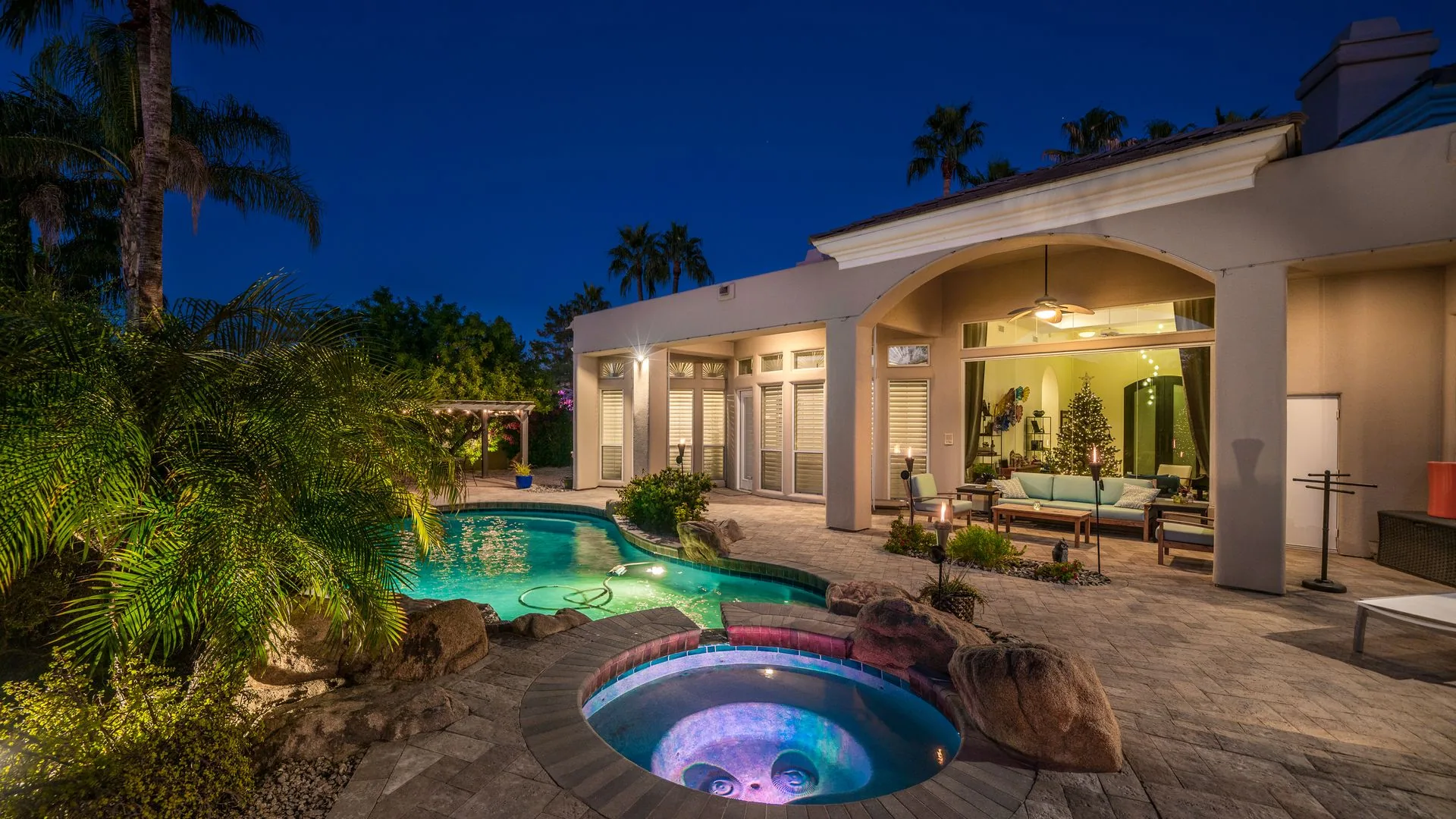
Backyard Landscaping Ideas Built for Phoenix Heat
August 19, 2026 · By Diamond Cut Landscaping

Backyard landscaping in Phoenix has one simple goal: help you enjoy your yard even when it feels like the sun is sitting on your block wall. If your outdoor space is built like a mild-climate backyard, you already know the result. Hot surfaces, stressed plants, and a patio that looks great but gets ignored from June through September.
We build outdoor living spaces across the Valley, and the patterns are pretty consistent. The yards that hold up best are designed around shade, heat-smart materials, desert plants that actually like it here, and irrigation that does not waste water. Below are our favorite backyard landscaping ideas for Phoenix homeowners, written the way we talk through a project on-site, not the way a national magazine would describe a backyard in Ohio.
Backyard landscaping starts with shade-first layout decisions
If you want a backyard you will use in summer, you do not start with plants. You start by deciding where you will sit, eat, and walk, then you protect those zones from the brutal afternoon sun. Shade is not a “nice to have” here. It is the difference between a space that feels welcoming and one that feels like a frying pan.
We like to map shade the same way you live:
- Main seating zone: put it where you can get coverage and a clean view from inside the house
- Dining or grilling zone: close enough to the kitchen that you will actually use it
- Pathways: design routes that do not force you across open, baking-hot exposures
Shade options that work well in Phoenix include:
- Covered patios tied into the home for full overhead protection
- Pergolas with tighter slats or shade panels so you get filtered light without the full blast
- Shade sails when you need targeted coverage and a lighter footprint
- Tree canopy placed to block west and south sun where it hits hardest
If you are considering a new shade structure, we often recommend designing the cover and the patio together so the footings, drainage, and furniture layout all make sense. That is exactly how we approach our pergolas and shade structures projects.
Backyard landscaping ideas that use hardscape as the “spine”
In Phoenix, hardscape is more than decoration. It is the backbone that makes the yard functional with less water and less upkeep. A well-planned patio, a few strong walkways, maybe a seat wall or two, and suddenly the yard has clear purpose even if the planting stays simple.
Hardscape materials we install a lot in the Valley because they hold up and look good:
- Concrete pavers for patterns, easy repairs, and clean transitions between “outdoor rooms”
- Travertine for a lighter, barefoot-friendly surface in pool and patio areas
- Natural stone accents for steps, landings, and focal points
- Decorative concrete when you want a modern look and broad, continuous surfaces
Costs vary depending on access, demolition, grading, and material choice, but these are realistic Phoenix-area starting ranges we commonly see:
- Paver patio installed: about $18 to $35+ per sq ft
- Travertine patio installed: about $25 to $45+ per sq ft
- Seat walls and planters: about $60 to $120+ per linear ft depending on finish and cap
If you are in the early planning stage, our custom patio service page is a solid place to see what materials and layouts tend to perform best in Phoenix heat and monsoon season.
Backyard design for Phoenix heat: pick a ground plane that will not punish you
“Ground plane” is just the fancy way of saying what covers most of your yard. In Phoenix, that choice impacts everything: how hot the space feels at night, how much dust you deal with, and how much time you spend maintaining it.
A common recipe that works well here is a durable hardscape zone for living, plus decomposed granite or decorative rock in planting areas, then boulders or a dry creek for depth and texture. If you have ever stood next to a dark gravel bed at 8 p.m. and felt the heat radiating back at you, you already understand why color and placement matter.
Desert-smart planting that looks intentional, not “leftover”
Plants should earn their spot in a Phoenix backyard. That does not mean your yard has to look like bare rock. It means your plant choices should make sense for the sun exposure, the reflected heat off walls, and how much water you are comfortable using.
We usually build planting plans around three layers:
- Shade and canopy: desert-adapted trees placed to protect patios and seating
- Structure: agaves, aloes, and columnar cacti that hold their shape year-round
- Seasonal color in the right spots: tougher flowering shrubs and perennials near entries and patios where you will actually see them
Two Phoenix realities we design around every time:
- Heat pockets: the corner by the block wall that bakes from 2 p.m. until dark is a totally different microclimate than the shaded side yard
- Monsoon runoff: where water moves in a storm should influence what you plant and how you grade
If you want a clean, HOA-friendly planting plan that stays sharp through summer, our desert-appropriate landscape planting service ties plant selection to soil prep, spacing, and irrigation so your yard does not look great for two months and then fall apart.
Water the Phoenix way: drip irrigation, smart zones, and fewer headaches
In Arizona, irrigation is not a set-it-and-forget-it accessory. It is part of the build. The goal is deep, efficient watering that supports strong roots while keeping waste down. Drip irrigation helps because it delivers water at the base of the plant instead of spraying it into dry air and wind.
The systems that perform best long-term usually include:
- Drip lines for shrubs, perennials, and trees
- Hydrozones so trees are not watered like groundcover
- Pressure regulation and filtration to reduce clogs and uneven output
- A controller setup that is easy to adjust when the seasons shift
Arizona’s water conversation is not going away, and efficient irrigation is one of the most practical ways to protect your landscape investment. If you want a deeper look at statewide conservation direction, the Arizona Department of Water Resources conservation resources are worth a quick read.
Small water features that make the yard feel calmer
Water features in Phoenix are not about turning your yard into a resort. They are about adding a steady, pleasant sound and giving your eyes something to land on when you step outside. A simple bubbling urn near the patio does more for the feel of a space than most people expect.
We typically recommend recirculating features that are designed for low desert maintenance, like:
- Bubbling pots or urns
- Spillway bowls
- Compact waterfalls with easy pump access
Budget-wise, many custom residential water features land around $4,000 to $15,000+, depending on stone, size, plumbing, and access. If you are comparing styles, Better Homes & Gardens backyard landscaping ideas has a helpful overview of how smaller features can still act as a strong focal point.
Outdoor kitchens and LED lighting that match how you actually use the yard
Most summer entertaining in Phoenix happens early or late. That is why we think about function after sundown from the start. A grill island or outdoor kitchen keeps the heat outside and cuts down on the constant in-and-out traffic through your house.
Lighting is what makes all of it feel easy. The most comfortable backyard lighting plans tend to layer a few types instead of relying on one bright fixture:
- Path lighting along walkways and changes in elevation
- Uplighting on feature trees and statement plants
- Step and under-cap lighting on stairs and seat walls
- Soft overhead or perimeter glow under a patio cover or pergola
Low-voltage systems are also a practical choice, and there is a safety side to doing it right. When you are ready to plan your own setup, our LED landscape lighting service page shows how we build lighting into the overall layout so it feels natural, not tacked on.
The turf question in Phoenix: natural grass, artificial turf, or skip it?
This comes up on almost every backyard consult. Natural grass can work, but big lawns in full sun are a commitment to water and maintenance. Artificial turf solves irrigation, but it can get hot enough in direct sun that nobody wants to stand on it barefoot.
What usually works best is a purpose-driven approach:
- Keep turf areas small and place them where you will use them
- Add shade nearby so the surface is not roasting all afternoon
- Let hardscape and desert planting do the heavy lifting everywhere else
If you are weighing water use and long-term expectations, the Green Keeper’s lawn guidance is a practical, Arizona-specific resource for understanding what it takes to keep grass healthy here.
FAQ: Backyard landscaping ideas for Phoenix homeowners
What is the best low-maintenance backyard landscaping for Phoenix?
A shade-first layout with a durable patio surface, desert-adapted plants in rock or DG beds, and drip irrigation zoned by plant type is usually the lowest-maintenance combo. You get a finished look without weekly mowing and constant plant replacement.
How do you make backyard landscaping feel cooler in Phoenix heat?
Start with overhead shade, then reduce heat gain with lighter hardscape and smart placement. Add tree canopy where it protects seating. Plan lighting so you naturally use the yard in the morning and evening. If you like the idea of a water feature, put it near the main sitting area so you hear it and enjoy it.
Are pavers or concrete better for Phoenix backyards?
Both can work. Pavers give you flexibility and easier repairs. Concrete can be clean and cost-effective if it is built with the right joints and drainage. In Phoenix, proper base prep and water management for monsoon storms matter more than the material label.
Do you need drip irrigation if you use native or desert-adapted plants?
Most of the time, yes. Even tough desert plants need consistent deep watering while they establish, and they still benefit from efficient irrigation during long dry stretches. Drip makes it easier to water the root zone without waste.
What does a full Phoenix backyard remodel usually cost?
A complete outdoor living upgrade with a new patio, shade structure, planting, irrigation adjustments, and lighting often starts around $25,000 to $60,000+. Higher-end builds with outdoor kitchens, extensive hardscape, and water features can reach $80,000 to $150,000+, depending on size and selections.
Conclusion: build a backyard you will use, even in summer
The best backyard landscaping in Phoenix works with the desert instead of fighting it. Put shade first, choose hardscape that can take heat and monsoon weather, plant with microclimates in mind, and use drip irrigation and lighting so the yard stays efficient and enjoyable.
If you want help turning ideas into a plan that fits your home and budget, reach out through our Phoenix landscape design-build contact page. If you are still in research mode, you can also browse more Phoenix-specific tips on our landscape design blog or get inspiration from these Architectural Digest backyard landscaping ideas.