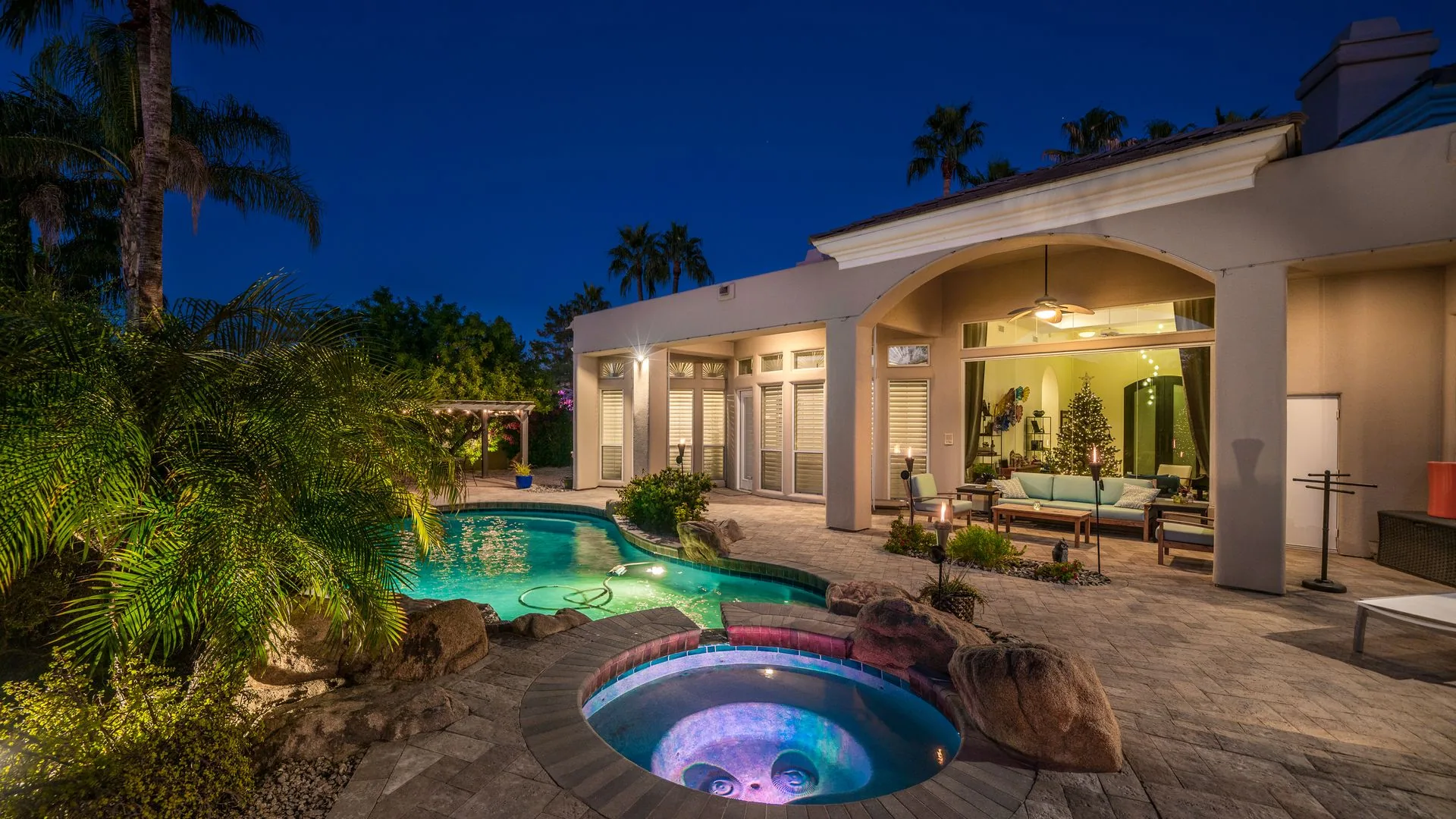
Deck Stair Lighting Ideas for Safer Phoenix Patios
August 14, 2026 · By Diamond Cut Landscaping

Deck stair lighting is one of those details you do not think about until the first time you step outside after dark with a drink in one hand and your eyes still adjusting from the bright kitchen. In Phoenix, that moment happens a lot. We grill late, we swim late, and we use the patio when the heat finally eases up. The right step lighting makes the whole space feel calmer and safer, without turning your yard into a landing strip.
We are Diamond Cut Landscape, and we install outdoor lighting the way we build everything else: planned around how you actually move through your yard. Below are deck stair lighting ideas we use across the Valley, plus the practical stuff homeowners always ask about like brightness, spacing, fixture types for concrete and stone, and what tends to hold up best through monsoon season and irrigation overspray.
Deck stair lighting in Phoenix starts with footing, not looks
Most near-misses we hear about happen on the same spots: the top step when you are stepping down into a darker patio, the bottom step when the walkway disappears into shadow, or any tread that blends in with patterned pavers or travertine. Add a pergola or railing casting stripes at night and your eyes have to work harder than they should.
Even if you are mainly thinking about aesthetics, it helps to treat deck stair lighting like a safety system first. Many exterior stairways also need an artificial light source at the top landing, depending on how your city interprets residential code. If you want to dig into what builders and inspectors look for, review deck stair lighting requirements and inspection tips.
Local reality check: inspections often happen in daylight. So the best time to plan step lights is during design, not after you realize the stairs vanish at night.
How bright should deck stair lighting be in real backyards?
Brighter is not automatically safer. If a step light is too intense, it creates a hot spot that forces your eyes to adjust, and the darker areas in between can look even worse. For most stair fixtures, a solid working range is 12 to 100 lumens per light, which lines up with the guidance in deck stair lighting lumen guidance.
How we usually explain it: you want guidance, not glare. We would rather give you a consistent, soft wash on every tread than one blinding fixture that makes the rest of the stair run feel sketchy.
- Lower lumens work well when you have multiple lights and light-colored treads.
- Mid-range lumens make sense for darker stone, deeper shadows, or wider stairs.
- High output is rarely needed on steps and usually gets dialed back with better placement.
Recessed vs. surface-mount deck stair lighting for Phoenix hardscapes
Out here, most steps are poured concrete, pavers, travertine, or natural stone. That material choice affects everything, especially how cleanly we can run wire and where a fixture can live without looking tacked on.
If you are already rebuilding steps or installing new hardscape, recessed fixtures are easier to plan and usually look fantastic. If your stairs are already finished and you want the best value with the least demo, surface-mount is often the smarter move.
Deck stair lighting placement and spacing that actually reads well at night
The goal is to make every elevation change obvious without shining light into your eyes. In most installations, step lights belong on the riser, aimed down across the tread so the walking surface is lit and the edge is easy to read.
Two practical rules we use on Phoenix projects:
- Mount height: about 6 to 8 inches above the tread is a reliable starting point for a clean wash.
- Spacing: plan for one light every 1 to 3 steps depending on stair width, surrounding ambient light, and how busy the area is.
On wider staircases, you may need fixtures on both sides so you do not end up with that half-lit, half-shadowed look. Floating treads and open risers take a little more finesse since shadows can get weird fast. In those cases, we aim the beam so it picks up the nosing of the next step down, since that is where your foot is looking to land.
Make deck stair lighting feel “built in” with a layered plan
Step lights do a lot, but they should not be the only thing carrying the night scene. The patios that feel finished are the ones where light is spread out and balanced. You notice the space, not the fixtures.
A simple layered setup we use often includes:
- Step lighting to mark treads and landings
- Path lighting to guide you toward gates, pool areas, side yards, or the grill zone
- Edge lighting along drop-offs, seat walls, or planters so changes in grade are obvious
- Accent lighting for a feature tree, textured wall, or water feature
If you are planning a full outdoor living build, it is worth integrating lighting from day one so wiring, drainage, and irrigation are not fighting for the same space. That approach fits naturally with our custom Phoenix patio builds and the way we coordinate elevations and materials from the start. For more inspiration and expert guidance, check out our deck lighting ideas from Diamond Cut Landscape blog post.
Why low-voltage LED deck stair lighting is the Phoenix-smart choice
For most Valley yards, 12V low-voltage LED is the sweet spot. It is efficient, safer to work with around outdoor living areas, and it makes future add-ons easier when you decide you also want path lights or accent lighting later.
Two things matter more in Phoenix than people expect:
- Heat, rain, and spray: monsoons and irrigation overspray are real, so we pick fixtures rated for wet locations when they will be exposed.
- Voltage drop: big backyards and long wire runs can cause far fixtures to dim or shift color if the transformer and wire gauge are not planned correctly.
That is why we design lighting as a system instead of a handful of lights. If you want it done cleanly and built to expand, our low-voltage LED landscape lighting service is the place to start.
Color temperature for deck stair lighting: warm, consistent, and easy on the eyes
Most Phoenix patios look best in 2700K to 3000K. It plays nicely with warm-toned hardscapes like travertine and colored concrete, and it does not feel harsh when you are relaxing outside.
The bigger issue is consistency. Mixing different Kelvin temperatures is one of the fastest ways to make an otherwise great yard look patchy at night. Pick a tone and stick with it across steps, paths, and accents.
Solar step lights in Phoenix: useful sometimes, disappointing other times
We get why solar step lights are tempting here. Phoenix sun feels unlimited. Solar can be fine for a lightly used side stair or as a temporary placeholder while you plan a remodel.
Where solar usually falls short is your main stair run. Output can be uneven, batteries fade, and the light pattern often is not as controlled. If the steps are how you get to the pool, grill, or patio seating every night, a wired low-voltage setup tends to be the better long-term solution.
What deck stair lighting costs in the Phoenix metro
Costs come down to three big variables: your stair material, how far we need to run power, and whether you are retrofitting or building new. Here are realistic planning ranges we see in the Phoenix market:
- Simple retrofit on a small set of steps: usually $600 to $1,500 for a basic low-voltage setup with a few surface-mount fixtures.
- Mid-size stair run plus a little layering: often $1,500 to $3,500 when you add step lights and a few path or accent lights.
- Full backyard lighting plan: commonly $3,500 to $10,000+ depending on zones, fixture count, and property size.
Recessed retrofits into existing concrete or mortared stone can cost more because cutting and patching takes time. If you are already rebuilding the steps or pouring new concrete, you can usually get a cleaner result with less labor by planning the wiring before the hardscape is finished.
FAQ: Deck stair lighting for Phoenix patios
How many lumens do you need for deck stair lighting?
Most step lights work well in the 12 to 100 lumens per fixture range. Safety usually improves more from even coverage and good aiming than from turning up brightness.
How far apart should deck stair lights be spaced?
A dependable layout is one fixture every 1 to 3 steps, with lights near the top and bottom landings. Wide stairs often look better with lights on both sides.
Should you choose recessed or surface-mount step lights?
If you are building new or rebuilding steps, recessed fixtures can look very clean. If your concrete, travertine, or stone is already finished, surface-mount fixtures are often the better value because you avoid cutting into the hardscape.
What color temperature looks best outdoors in Phoenix?
For most patios, 2700K to 3000K warm white feels natural and matches desert hardscape colors well. The key is keeping all fixtures on the same color temperature so the lighting looks intentional.
Can you DIY low-voltage deck stair lighting?
You can for simple kits, but it is easy to end up with glare, awkward shadows, or dim lights at the far end of the run due to voltage drop. If you want a plan that coordinates with hardscape elevations, irrigation lines, and future upgrades, professional design and installation usually pays off.
Conclusion: safer steps, better nights outside
Good deck stair lighting makes your Phoenix patio easier to use after dark and it quietly raises the quality of the whole backyard. Keep it warm, avoid glare, space fixtures so every tread reads clearly, and choose hardware that can handle heat, rain, and irrigation spray. If you want help mapping out step lights as part of a complete outdoor living plan, reach out through our Diamond Cut Landscape consultation request page and we will walk your yard with you.