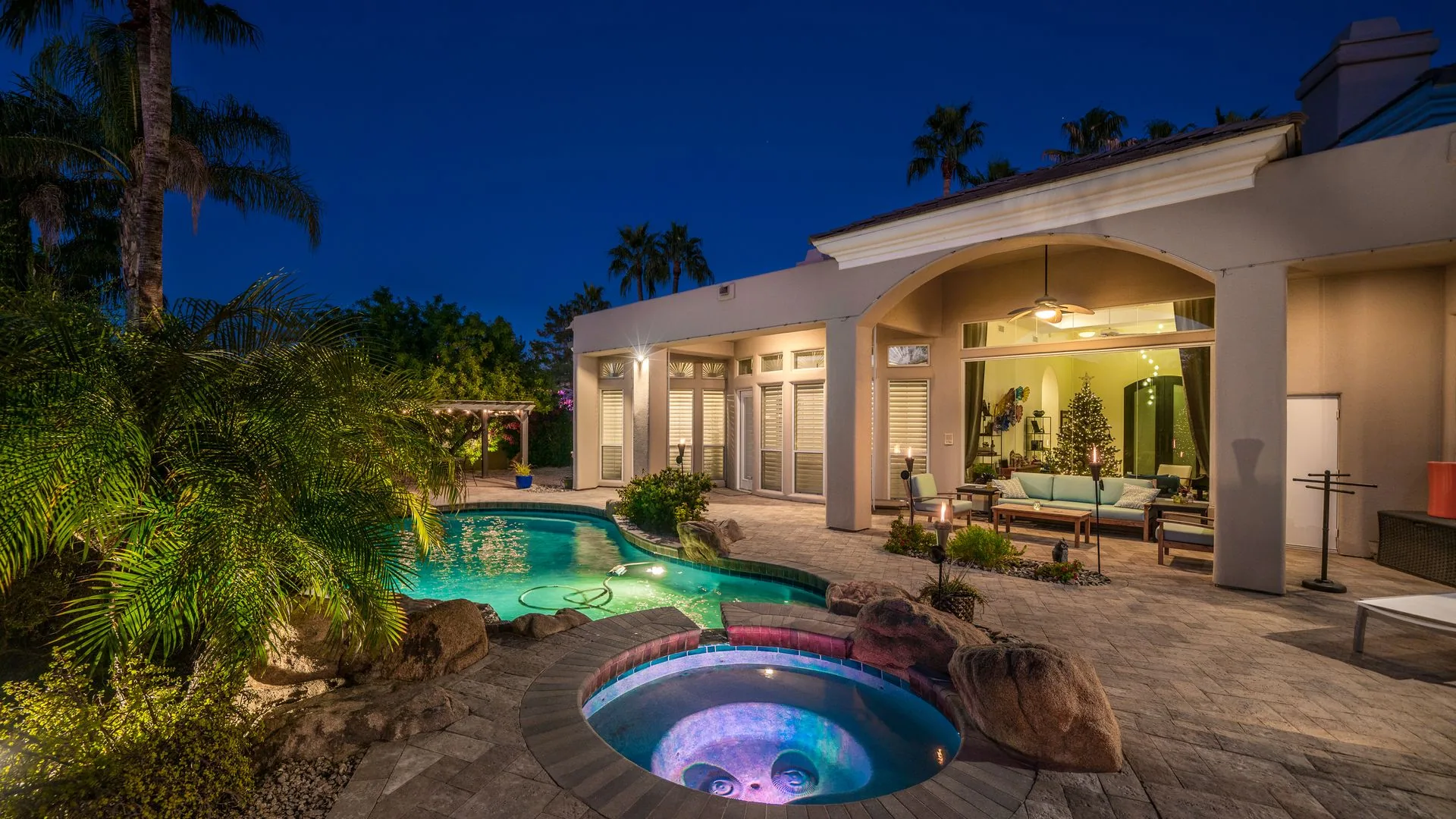
Fire Pit Patio Ideas for Phoenix Paver Patios
September 22, 2026 · By Diamond Cut Landscaping

Fire pit patio ideas are one of the simplest ways to make your Phoenix paver patio feel like an actual outdoor room instead of “just the backyard.” When the sun finally drops and the evenings cool off from fall through spring, a good fire feature becomes the spot everyone drifts toward, even if you did not plan on staying out long.
At Diamond Cut Landscape, we build patios and fire features as one coordinated project so the pavers, seating, lighting, drainage, and utilities all feel intentional. If you are already thinking about a new patio or a refresh, start by looking at our hardscape and fire feature construction services so you can see what a full design-build approach looks like in the Valley.
Why fire pit patio ideas make sense in Phoenix (and when you will actually use them)
Phoenix is a little upside down compared to colder climates. You are not building a fire feature to “get through winter.” You are building it to stretch out the best time of year, those months when it is comfortable outside and your patio finally competes with the couch.
Another local bonus is that pavers, stone, and block play nicely with heat. They hold up well in sun, they do not mind the occasional monsoon blow-through, and they give your fire feature a clean, non-combustible base. If you want to browse design directions, Belgard’s roundup of fire pit designs for outdoor living spaces shows how fire pits and fire tables can act like the anchor for the whole patio layout.
Fire pit patio ideas start with layout: size, spacing, and the “right” spot
The most common headache we see is a fire pit that was treated like an accessory after the patio was done. That is when you end up with odd gaps, tight chair spacing, or a gas line that has to take the scenic route.
If you plan the fire feature early, you can line up the paver pattern, the seating, and the utility runs so everything feels like it belongs. For a basic placement rule, Unilock notes a typical range of roughly 15 to 25 feet from the home and other structures in their guide to patio size and placement for a fire pit. In real Phoenix yards, the best location is often where your lounge area naturally wants to live, not necessarily the center of the patio.
- Give people room to move: You want enough space to pull chairs in and out and still walk around without stepping into gravel or planters.
- Think about wind: If you go wood-burning, smoke direction matters. Even with gas, a windy corner can make the flame sputter.
- Plan for monsoons: The patio should shed water away from the house and away from the burner area so you do not get pooling and staining.
Fire pit patio ideas: fire pit vs. outdoor fireplace on a Phoenix paver patio
Both options work in the Valley, but they create different “vibes,” and that affects how you lay out your furniture.
If your patio is on the smaller side, a fire pit is usually the cleanest way to get the experience without crowding walkways. If you have room for multiple zones, a fireplace can be the architectural centerpiece while your dining and cooking areas sit nearby.
Gas vs. wood in Phoenix: what most homeowners end up choosing
Most of the time, Phoenix homeowners choose gas. It is easier to live with, it is quick to turn on and off, and it tends to fit better with covered patios and pergolas. Wood can be great, but the smoke, ash, and windy nights make it more of a commitment than many people want.
Better Homes & Gardens points out that fire pits should sit on non-combustible surfaces like stone, brick, or concrete in their guide to fire pit ideas and setup guidance. That is one reason paver patios are such a natural match for fire features when they are built correctly.
- Natural gas: Best if you want a permanent, “flip a switch” setup and plan to use it often. It takes coordination during the build so the line is run cleanly.
- Propane: A good option when a gas line is not practical. Just plan a smart hiding spot for the tank so the patio still looks finished.
- Wood-burning: Doable in the right yard, but consider smoke, cleanup, and any HOA or city restrictions before you fall in love with the idea.
7 fire pit patio ideas that look right at home on Phoenix pavers
These are layouts and styles we see work well in the Valley because they stay practical, look clean, and do not fight the desert. Mix and match them based on your home style, your lot size, and how you actually use the space.
1) A centered fire pit with a curved seat wall
If you like the idea of everyone facing in, this one is hard to beat. A round or square fire pit in the middle, then a curved seat wall to wrap the space and add built-in seating without filling the patio with furniture.
- Works well for: families and frequent get-togethers
- Small design move that helps: a contrasting paver border to “frame” the fire pit zone
2) A fire pit lounge as the “next stop” after the dining area
This is one of our favorite ways to make a medium patio feel bigger. You eat under shade, then you step into a lounge area with a fire feature. Same patio, different purpose.
A simple trick is changing the paver pattern or adding a border so the lounge zone reads like its own little room. If you are building a full entertaining setup, you may also want to coordinate the lounge area with cooking space. Our guide to outdoor kitchen and grill island designs in Phoenix can help you connect the dots.
3) A modern fire bowl on a clean, geometric paver layout
For desert-modern homes, a low-profile fire bowl can look sharp without feeling busy. Pair it with simple seating and a restrained plant palette, think agave, a few ornamental grasses, and decorative rock that does not blow around every time the weather shifts.
- Works well for: smaller patios and contemporary architecture
- Keep it looking intentional: limit your materials and let the flame be the focal point
4) A square fire pit with a bold paver border
If your house has clean lines, you can echo that with a square or rectangular fire pit. A soldier course border or a contrasting paver color blend around the feature makes the whole patio look planned instead of pieced together.
5) An outdoor fireplace to “anchor” a true living-room-style patio
A fireplace adds height and structure, which is why it works so well when you want the patio to feel like a real outdoor living room. You can finish it in stucco to blend with the home, or go with stone veneer for more texture.
When you are building multiple zones, dining, cooking, lounging, a fireplace can be the visual anchor that keeps the whole yard from feeling scattered. Yardzen’s overview of fire pit landscaping ideas and outdoor zone planning touches on that same concept of designing outdoor “rooms” that flow together.
6) A fire pit paired with low-voltage LED lighting (so it feels good after dark)
In Arizona, you will spend a lot of patio time at night, especially in shoulder seasons when the days still run warm. A few well-placed lights on steps, pathways, and seat walls make the fire pit area safer and easier to use, without blasting the yard with one harsh floodlight.
If you want a simple plan for layering light without overdoing it, take a look at our backyard lighting ideas for Arizona outdoor living.
7) Tie the fire feature into desert planting for a finished, low-maintenance edge
A fire pit looks a little lost when it is surrounded by nothing but pavers. Adding desert planting and rock along the patio edge softens the lines and makes the space feel like it belongs in the yard.
- Go drought-smart: choose plants that can handle reflected heat from hardscape
- Keep irrigation tidy: drip lines and clean valve placement make maintenance easier later
- Pick the right rock: heavier decorative gravel tends to stay put better in monsoon season
What fire pits and outdoor fireplaces cost in Phoenix
Costs move around based on the size of the feature, finishes, gas line distance, and whether you are building new pavers or modifying an existing patio. These are realistic Phoenix-metro ballparks we commonly see for professionally installed projects with typical access.
- Gas fire pit insert with a basic surround on a paver patio: $4,500 to $9,000
- Custom-built paver patio fire pit with upgraded finish and ignition: $8,000 to $15,000
- Fire pit plus a curved seating wall and caps: $12,000 to $25,000+
- Outdoor fireplace (built-in, finished, with gas): $15,000 to $35,000+
The easiest way to stay on budget is to plan the fire feature at the same time as the patio. That way, we can route gas and electrical cleanly, dial in the grading, and avoid tearing into finished hardscape later.
Build-quality details that matter in the Sonoran Desert
Desert weather has a way of finding shortcuts in a build. If base prep is weak, pavers can settle. If drainage is ignored, you see it the first time a monsoon dumps water on the patio. If utilities are an afterthought, you end up with visible patches and odd transitions.
- Non-combustible surfaces and clearances: pavers and stone are great, but placement matters so heat stays away from walls, overhangs, and seating.
- Proper base prep: compaction and edge restraint keep the patio tight so the fire feature does not end up sitting “proud” over time.
- Utility coordination: gas and electrical should be planned before pavers go in, not trenched as a last-minute fix.
- Drainage first: we want water moving off the patio and away from both the home and the fire feature.
If you are starting from scratch or you want to rethink the whole layout, our landscape design services with 2D/3D planning make it easier to see how the pieces fit before construction starts.
FAQ: Fire pits and fireplaces on Phoenix paver patios
How far should a fire pit be from my house?
A common guideline is roughly 15 to 25 feet from the home and other structures, but the real answer depends on your layout, flame height, wind exposure, and whether the area is covered. We plan it around how you will actually use the space and where people will walk.
Is a gas fire pit better than wood in Phoenix?
For most homeowners, yes. Gas is cleaner, easier to control, and more convenient for casual weeknight use. Wood can still be a fit, but smoke, ash, and wind can make it less practical in many neighborhoods.
Can you add a fire pit to an existing paver patio?
Often, yes. It depends on how the patio was built, whether it has proper base prep, and how cleanly we can route gas or propane. In some cases, it is smarter to rework part of the patio so everything drains correctly and the finished look is seamless.
What materials are best around a fire pit?
Concrete pavers, natural stone, and travertine are common choices in Phoenix because they are durable and non-combustible. Installation quality matters just as much as the material, especially base prep and slope for drainage.
Do I need a permit for an outdoor fireplace or gas fire pit?
Sometimes. It varies by city and by how the gas line and structure are built. If permits are required for your project, we will help you understand what applies and handle the process as part of the build.
Conclusion: plan the fire feature with the patio, not after it
The best fire pit patio ideas are the ones that feel like they have always belonged in your yard. When the paver layout, seating, lighting, gas, and drainage are designed together, you get a patio you will actually use, and you avoid the awkward fixes that show up when a fire pit gets tacked on later.
If you want help designing and building a fire feature that fits your home and holds up to Phoenix weather, reach out through the Diamond Cut Landscape contact page and tell us what you are picturing.