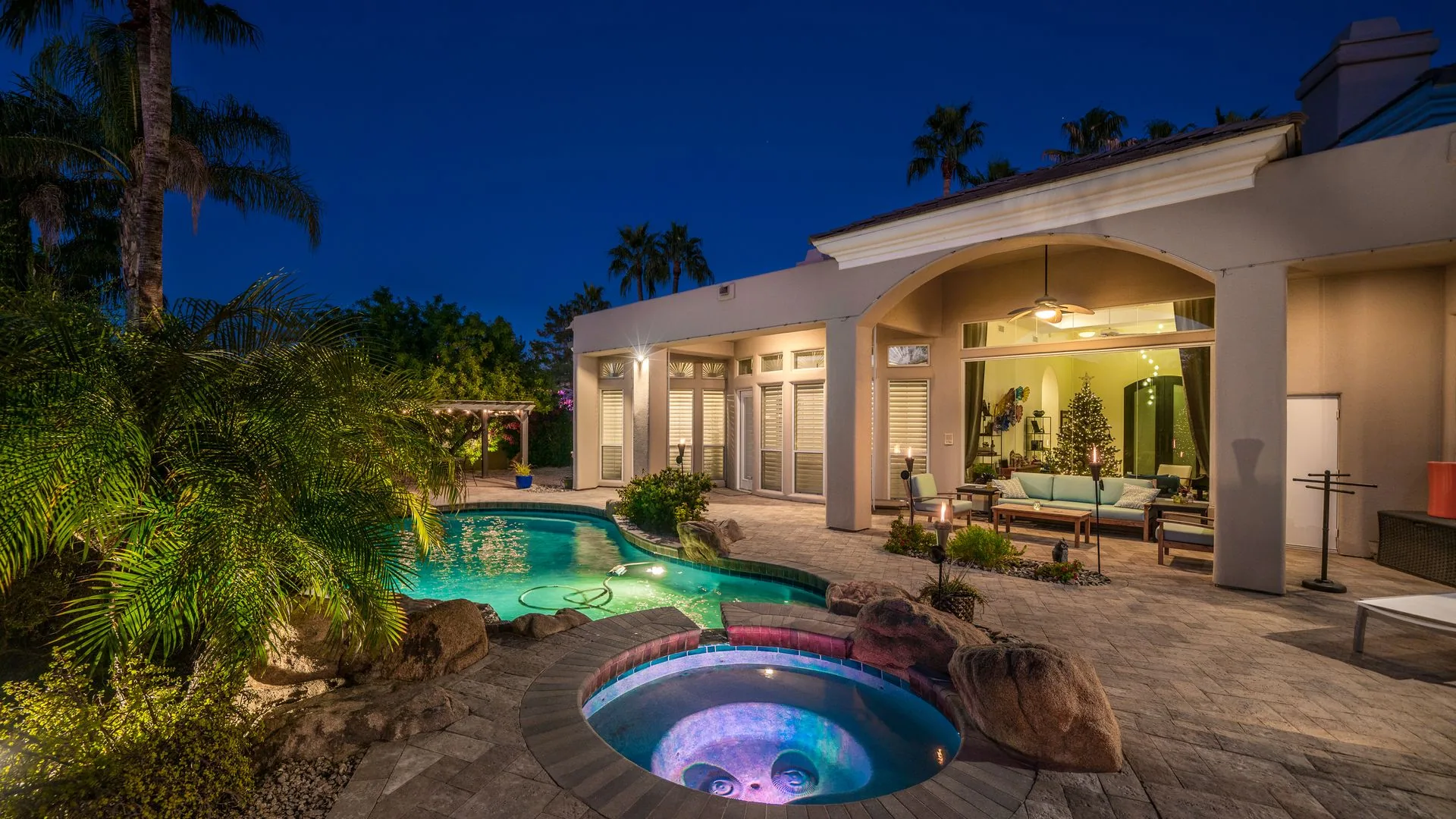
Hardscape Design 101: Patios, Walls, Walkways
September 9, 2026 · By Diamond Cut Landscaping

Hardscape design is the difference between a Phoenix backyard that looks “fine” and one you actually use week after week. Out here, the choices you make have to stand up to long heat stretches, bright glare, and those quick monsoon bursts that can send water exactly where you do not want it. Plan it right once, and you get a space that feels natural to walk through, comfortable to hang out in, and easy to keep looking sharp.
Below, we will walk through the three pieces that do most of the heavy lifting in outdoor living spaces across the Valley: patios, walls, and walkways. You will get Phoenix-friendly sizing tips, material pros and cons for desert sun, and the drainage details that protect your home and your investment.
Hardscape design in Phoenix: the “bones” that make the yard usable
Hardscaping is every built element in your landscape. Think patios, pavers, steps, walkways, seat walls, retaining walls, fire features, and the base work that holds it all in place. In the Sonoran Desert, these features do more than look good. They also help you manage sun exposure, move water safely, and keep gravel and soil from migrating after storms.
When hardscape design is done well, your yard feels like it has a plan, not a collection of add-ons. You can see where people gather, how they get from the door to the grill, and where water is supposed to go when the clouds open up.
Hardscape planning: start with how you live, then draw the layout
One of the easiest ways to burn budget is to build a patio first, then try to wedge everything else around it later. Instead, zoom out. Start with the whole property and a few everyday questions: Where do you walk now? Where does the sun hit at 4 p.m. in July? Where does rain run off your roof and pool deck?
- Use: dining, lounging, grilling, pool circulation, kids, pets, side-yard storage.
- Traffic: sliding door to patio, gate access, trash bins, path to the garage.
- Shade: not just winter shade, but the kind you want from May through September.
- Drainage: spots that pond, sheet flow patterns, and any erosion ruts after monsoons.
- Future wants: pergola, lighting, outdoor kitchen, fire feature, planters.
If you want a plan you can actually build from, our landscape design services turn your wish list into elevations, materials, and a layout that accounts for drainage and utilities. It also makes building in phases a lot easier, since the “bones” are set from the start.
Patio hardscape design: your anchor space
Your patio is usually the main destination, the place you end up with a plate of food, a cold drink, or a few friends visiting. Get the patio right, and everything else connects cleanly. Get it wrong, and you will feel it every time you squeeze past a chair or step over a too-narrow path.
In Phoenix, comfort matters just as much as the look. Surface temperature, glare, and how the patio sheds water all affect whether you use it in real life.
Patio sizing that feels comfortable, not cramped
Most patio regret comes down to one thing: it is a little too small for the way you actually move. Chairs need pull-back room. Grill zones need clearance. People naturally drift around the edges when they talk, so you want circulation space built in.
Quick gut check: stand at your back door and picture a normal weekend. If you are carrying food out, where do you set it down? If someone is grilling, can another person walk behind them without doing the sideways shuffle? Those little moments are what good patio sizing solves.
Patio materials that handle desert heat and everyday wear
Not all patio materials behave the same in 110-degree sun. Dark colors can feel hot underfoot, and dusty conditions can make certain finishes show staining or buildup faster. Your best fit depends on how much direct sun the patio gets and how you plan to use it.
- Concrete pavers: flexible styles, easy repairs, lots of pattern options. Light and mid tones tend to be more comfortable in full sun.
- Travertine: a popular choice around pools and patios for a clean, high-end look and good comfort underfoot compared to many darker surfaces.
- Poured concrete: cost-effective for larger areas, but it needs solid prep, control joints, and the right slope so you do not end up with puddles.
- Natural stone: beautiful and durable, but it takes experienced installation to keep things even and stable.
If you want to see common options we install across the Phoenix metro, take a look at our custom patio services. We focus on patios that look good on day one and still look good after seasons of heat cycles and monsoon weather.
Hardscape design for walls: retaining walls, seat walls, and privacy without the bulk
Walls are the quiet problem-solvers in a desert yard. Sometimes you need a retaining wall because the grade drops off. Other times you want a seat wall to frame a fire feature, or a screen wall to hide pool equipment and create a little privacy. Done right, a wall makes the whole yard feel more intentional, and it can add function without expanding your patio footprint.
Before you pick a block style, decide what the wall needs to do:
- Retaining wall: holds soil and manages elevation changes. It needs proper footings, backfill, and drainage so it does not shift after heavy rain.
- Seat wall: defines the edge of a patio or fire pit zone and adds extra seating without more furniture.
- Planter wall: raises planting areas so they are easier to maintain and can help contain irrigation zones.
- Privacy or screen wall: blocks views, wind, or equipment. Great for side yards and tight lot lines.
One Phoenix-specific note: if a wall is doing structural work, drainage is not optional. We build in the right drainage path behind the wall so water does not build pressure during monsoons and cause movement over time.
Walkway hardscape design: daily convenience, safer footing, cleaner curb appeal
Walkways are the feature you feel every day. They keep you out of loose gravel, they give guests a clear route, and they stop those dirt tracks that show up where everyone naturally cuts across the yard.
Layout changes the whole vibe. Straight lines read clean and modern. Gentle curves slow you down a bit and feel more relaxed. Either can work in Phoenix, as long as the path width, base, and edging match how you use it.
- Comfortable width: 36 inches works for one person. If you want two people side by side or you roll bins through, 42 to 48 inches feels better.
- Materials that behave: pavers stay crisp and defined. Decomposed granite can look great, but it needs proper edging and compaction, especially on slopes.
- Night use: Phoenix backyards get used after sundown. Plan lighting early so you are not adding wires and fixtures as an afterthought.
If you are comparing styles, borders, and color combinations that work in Arizona yards, our post Colorful Walkways: Hardscape Path Ideas for AZ shares practical examples and design ideas you can borrow.
The hardscape design detail that saves projects: drainage you can trust
In Phoenix, drainage is where good hardscape stands apart from hardscape that looks nice until the first big storm. Patios and walkways move water faster than native soil, so small grading mistakes can turn into puddles, foundation runoff, or washed-out planting beds.
Even the City of Phoenix notes that stormwater can carry pollutants and flow quickly during rain events, which is why directing runoff appropriately matters around homes and neighborhoods. See City of Phoenix stormwater guidance for a local overview of how stormwater is managed and why it matters.
- Slope with intention: patios and paths should pitch away from the home toward a safe drainage area.
- Base prep is everything: many “paver problems” are really compaction or base-depth problems.
- Use collection where needed: drains, scuppers, and dry creek features can move water without creating an eyesore.
If you want the technical side explained in plain language, including why prep and drainage details matter so much, hardscape installation planning and what to expect offers a helpful step-by-step overview.
Budget expectations in Phoenix: realistic planning ranges
Pricing in the Valley depends on access, demo work, base prep, material selection, and how detailed the design is. These ranges are solid for early budgeting for professional installation, but your exact site conditions can move the numbers.
- Paver patio: often $18 to $35+ per square foot installed.
- Travertine patio: often $25 to $45+ per square foot installed.
- Concrete patio: often $10 to $20+ per square foot installed.
- Seat walls: commonly $90 to $180+ per linear foot.
- Structural retaining walls: commonly $120 to $250+ per linear foot.
- Walkways: often $15 to $35+ per square foot installed.
If you are aiming for a full backyard build, we still recommend planning everything at once even if you build in phases. When the elevations and alignments are set from the start, your future pergola, lighting, or outdoor kitchen fits without costly rework.
Hardscape and desert planting: keep it cool, not like a parking lot
A yard can be low-water and still feel inviting. The trick is balance. Too much hard surface, especially in darker tones, can create a heat island effect that makes the space less comfortable. Planting pockets soften edges, give you future shade, and make the design look finished instead of purely functional.
We often mix hardscape zones with desert-adapted plants and drip irrigation so the look stays clean and water-wise. If you are thinking through plant palettes that match sun exposure and real maintenance habits, see our desert-appropriate planting services page, which explains how we approach it in Phoenix-area yards.
FAQ: Hardscape design 101 for Phoenix homeowners
What is the first step in hardscape planning?
Walk your yard like you are hosting a normal weekend. Track where you enter, where you naturally walk, where you want shade, and where water moves during storms. Once the layout works, materials and style choices get much easier.
How much slope should a patio have for drainage?
Enough to move water off the surface without feeling tilted when you sit or place furniture. The right pitch depends on where the water can safely go, so we plan it based on your lot, surrounding grades, and drainage options.
Are pavers a good choice for Phoenix heat?
Yes, especially in lighter tones and with correct base prep and edge restraint. Proper installation helps prevent shifting during heat cycles and after heavy rain.
Do I need a retaining wall, or can I regrade instead?
If the elevation change is mild and you have room, regrading can work. If you need a sharper change, want terraces, or are fighting erosion, a retaining wall is usually the cleaner long-term solution.
How wide should a backyard walkway be?
36 inches is fine for one person. If you want two people side by side or you will move bins and equipment through the yard, 42 to 48 inches is a better target.
How long does a typical hardscape project take in Phoenix?
A simple patio or walkway can take about one to two weeks once construction starts. A full backyard with multiple features can take several weeks, depending on complexity, demolition, grading, and material lead times.
Conclusion: plan the bones, then enjoy the backyard
The best hardscape design treats patios, walls, and walkways like one connected system. When the layout fits how you live, the materials make sense for Phoenix heat, and the drainage is handled up front, your yard becomes easier to use and easier to maintain. If you want help turning ideas into a cohesive design and build plan, reach out through our contact page for Diamond Cut Landscape and we will talk through your space.