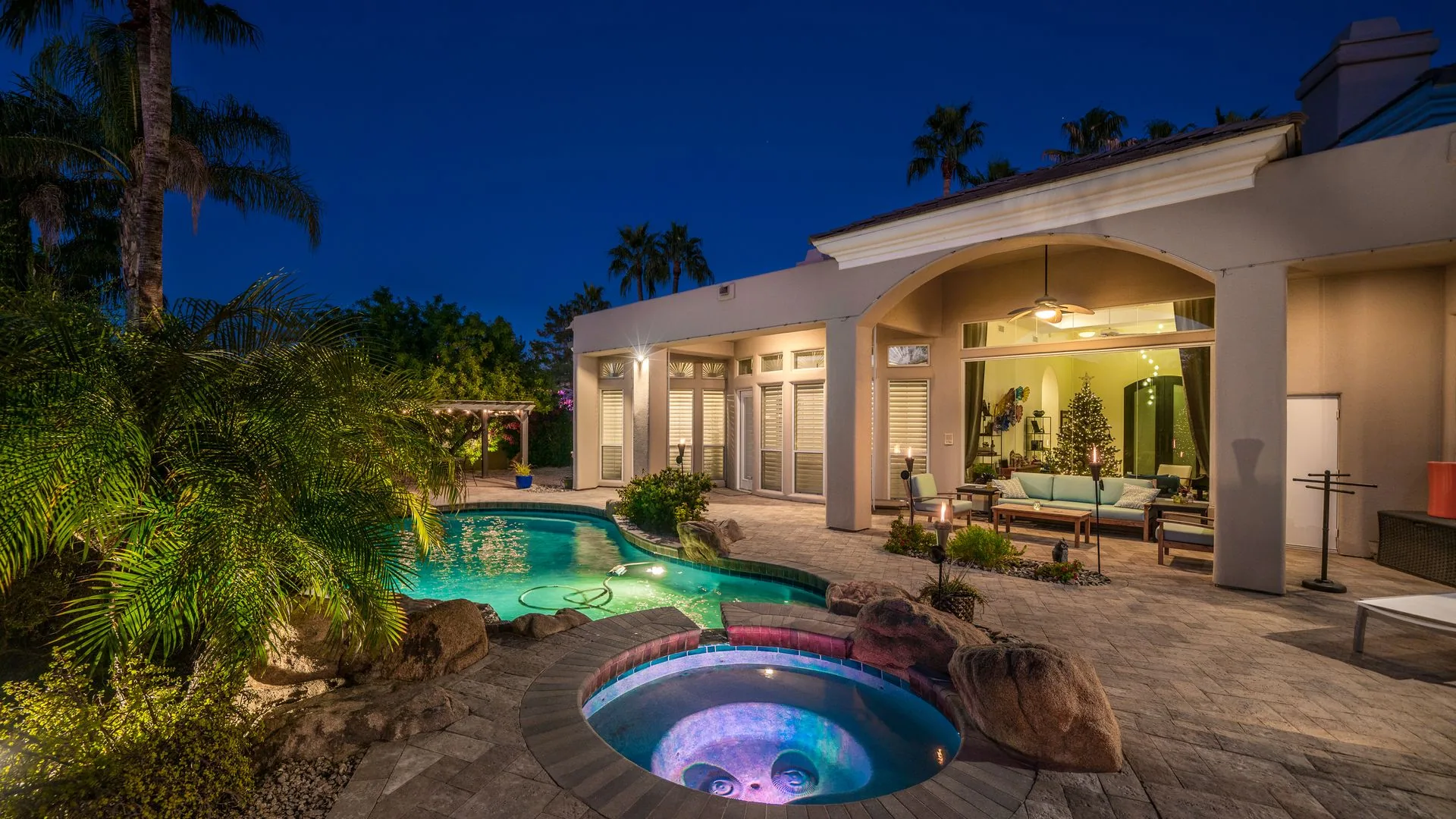
Landscape Boulders: How to Buy and Place Big Rocks
August 27, 2026 · By Diamond Cut Landscaping

Landscape boulders are one of those “instant credibility” moves in a Phoenix yard. Pick the right stone, set it the right way, and your landscape stops looking like a blank DG lot and starts looking like it’s always been part of the Sonoran Desert.
We install boulders all over the Valley, and the same pattern shows up again and again: the boulder itself is only half the win. The other half is how you shop for it, how you get it on-site without wrecking a gate or a driveway, and how you seat it so it feels natural and stays put through monsoon season.
This guide walks you through what counts as a boulder in Phoenix landscaping, the rock types that make sense here, what pricing usually looks like once delivery and equipment are real, and how to place big rocks for landscaping so they do not scream “just delivered.” If you want help end-to-end, we can source and set stone as part of our rock installation services.
What counts as landscape boulders in Phoenix?
Most people call anything “a big rock” a boulder, but in landscape terms it usually means a stone that is 12 inches or larger in its longest direction. In residential yards around Phoenix, the most common sizes you’ll see are:
- 18 to 36 inches: big enough to read as substantial, still workable in typical front yards
- 36 inches and up: a specimen piece, often the focal point that everything else is built around
One thing that throws homeowners at the stone yard: boulders are typically chosen and sold by the piece, not like DG or gravel that gets ordered by the yard. Shopping feels more like selecting a feature item than buying bulk material, which is a good mindset if you want the finished yard to look intentional.
Why landscape boulders work so well in Sonoran Desert yards
In the Phoenix metro, the best-looking landscapes usually borrow what you see in real desert terrain: granite outcrops, wash stones, and rugged shapes that break up open space. Landscape boulders fit that vocabulary naturally, whether you lean desert-modern or more naturalistic.
They are also useful, not just decorative. We use boulders to help with:
- Monsoon runoff: shaping and protecting swales and dry creek beds so water moves where it should
- Erosion control: slowing water on slopes and reinforcing transitions between grade changes
- Low-maintenance structure: giving the yard “bones” so you are not relying on finicky groundcovers to fill every open area
- Plant microclimates: creating small shade pockets and wind breaks that can take the edge off brutal afternoon sun
Best rock types for landscape boulders in Phoenix
Your best choice depends on your home style, your other hardscape finishes, and the colors already happening on your property. In the Valley, we generally steer people toward boulders that look at home in desert washes and hold up under UV, heat swings, and occasional heavy flow.
If you are already planning pavers, a patio, a seating wall, or a full outdoor living space, we recommend choosing boulders during the same planning window so everything feels like one project, not a pile of separate decisions. That is exactly what we do during a full landscape design process.
Landscape boulders sizing and pricing in Phoenix: what to expect
Stone yards and suppliers usually size boulders by their longest dimension and sell them one at a time. You might also hear “one-man” or “two-man” rocks. Translation: can a couple of people safely move it, or are you renting machinery and calling in help?
In Phoenix, it is normal for the final cost to be driven as much by delivery and access as by the stone itself. As a planning range (including typical handling and placement), you may see:
- 18 to 24 inch boulders: often a few hundred dollars per stone installed, depending on type and site access
- 24 to 36 inch boulders: commonly several hundred to over a thousand dollars per stone installed, especially if equipment access is tight
- 36+ inch specimen boulders: often in the thousands once trucking, equipment time, and placement conditions are included
One practical note: a “good deal” boulder can get expensive fast if it requires a special truck, a tight backyard run, or extra labor to protect existing hardscape. If you are comparing options, it helps to read how suppliers categorize and handle larger pieces, like boulder sizing and purchasing information from Earth Stone Rock.
Buying landscape boulders: what to look for at the stone yard
If you want boulders that look like they belong, pick them in person. Photos flatten everything. In real life, you will notice color shifts, texture, and whether a rock has one great “face” or is kind of dull from every angle.
When you are walking the yard, look for:
- A best side: at least one face you will want aimed toward a main view, like the front walk or patio
- Color that plays nice: match the boulder tones to your DG, your pavers, and your home exterior
- Natural shape: avoid stones that look too round and uniform unless your design is intentionally clean and sculptural
And yes, we will say the quiet part out loud: most people buy too small. Once a boulder is set correctly, it sits lower than you expect and looks more “grounded,” which also makes it look smaller. That is why guidance like Southwest Boulder & Stone’s boulder placement tips often recommends sizing up.
Delivery and access planning for big rocks for landscaping
This is where DIY plans can go sideways. A rock that looks manageable at the yard can become a real problem at home if the gate is narrow, the route crosses new pavers, or you have overhead lines that limit equipment.
Before you buy, do a quick access check like we do on a site visit:
- Gate width and turns: can a skid steer or mini-excavator actually make the corner?
- Overhead clearance: think power lines, tree canopies, eaves, and patio covers
- Ground conditions: DG, irrigation-soaked soil, or soft areas can bog equipment down
- Distance to final placement: long carries mean more time, more labor, and more chances to damage something
If your project includes a patio, a pergola, or any other construction, boulder delivery is often easiest when it is scheduled before the final finishes go in. You can see how we blend stone into full outdoor builds in our landscape project gallery.
How to place landscape boulders so they look natural (and stay stable)
Natural placement is not “random,” but it also should not look measured with a tape. The goal is a settled, desert-wash look, like the rock has been there longer than the house.
- Bury about one-third of the boulder. Dig a pocket, set the stone, then backfill and compact. Visually it looks right, and mechanically it helps keep the rock from shifting.
- Start with an anchor, then add supporting stones. One larger boulder with two or three smaller companions usually reads more natural than evenly spaced singles.
- Skip symmetry. Vary spacing and angles. Odd-number groupings often feel more organic, but do not force it.
- Pay attention to the grain. If the stone has layers or striations, orient nearby rocks so they feel related, not like they are fighting each other.
- Pair rocks with the right plants. Use boulders as backdrops for agave, prickly pear, golden barrel, ornamental grasses, or a feature tree. The rock gives the plant a frame, and the plant softens the rock.
If you are using boulders for drainage features, it helps to understand how water wants to move on your property. The City of Phoenix has practical stormwater guidance that’s useful when you are thinking about runoff routes and flow paths, including stormwater management resources from the City of Phoenix.
One focal stone or clustered boulders: which looks better?
Both can look great. The better choice usually comes down to yard size, sightlines, and how much “negative space” you want.
- Minimalist focal stone: one strong specimen boulder as a sculptural point. This fits modern designs with clean lines and fewer plant varieties.
- Clustered boulders: an anchor boulder with companions, repeated in one or two areas. This is a solid approach for larger lots, sloped yards, and dry creek bed layouts.
In smaller courtyards, one well-placed rock can be enough. In bigger front yards, multiple clusters can feel balanced if you keep your materials consistent and repeat plant forms and lighting.
For more ideas on using stone to boost curb appeal and create functional, attractive yard features, check out our blog post on ways to enhance curb appeal in Phoenix.
FAQ: Landscape boulders and big rocks for landscaping
How many landscape boulders do you need for a typical Phoenix front yard?
Most front yards look better with a small “family” of stones instead of one lonely boulder. A common starting point is one anchor boulder plus 2 to 5 smaller companions, then you adjust for lot size, plant density, and where you want the eye to travel.
Should you put boulders on top of decomposed granite or under it?
Set the boulder into the native soil first, usually burying about one-third of its height, then bring DG up around it. If you place it on top of DG, it almost always looks perched and it is more likely to move.
Do landscape boulders increase home value in Phoenix?
They can help if they are part of a cohesive, well-built landscape. The value is in the full presentation: good layout, clean edges, plant selection that survives our summers, and stone that looks like it belongs.
Can boulders help with drainage during monsoon storms?
Yes, when they are used to reinforce swales, protect edges, and guide flow. The key is planning the water route first. Poor placement can act like a dam and create puddling in all the wrong places.
What is the biggest mistake people make with big rocks for landscaping?
Not burying them. The second most common mistake is placing similar rocks at equal spacing, which reads artificial fast.
Conclusion
Landscape boulders are a Phoenix-friendly way to add structure, solve a few practical problems, and make a yard feel established. If you want help choosing stone that matches your home, planning access and drainage, and placing everything so it looks natural, we can handle it as part of a full build or a focused boulder install.
Send us a few details and request a consult through the Diamond Cut Landscape contact page, and we will help you map out a boulder plan that fits your yard and your budget.