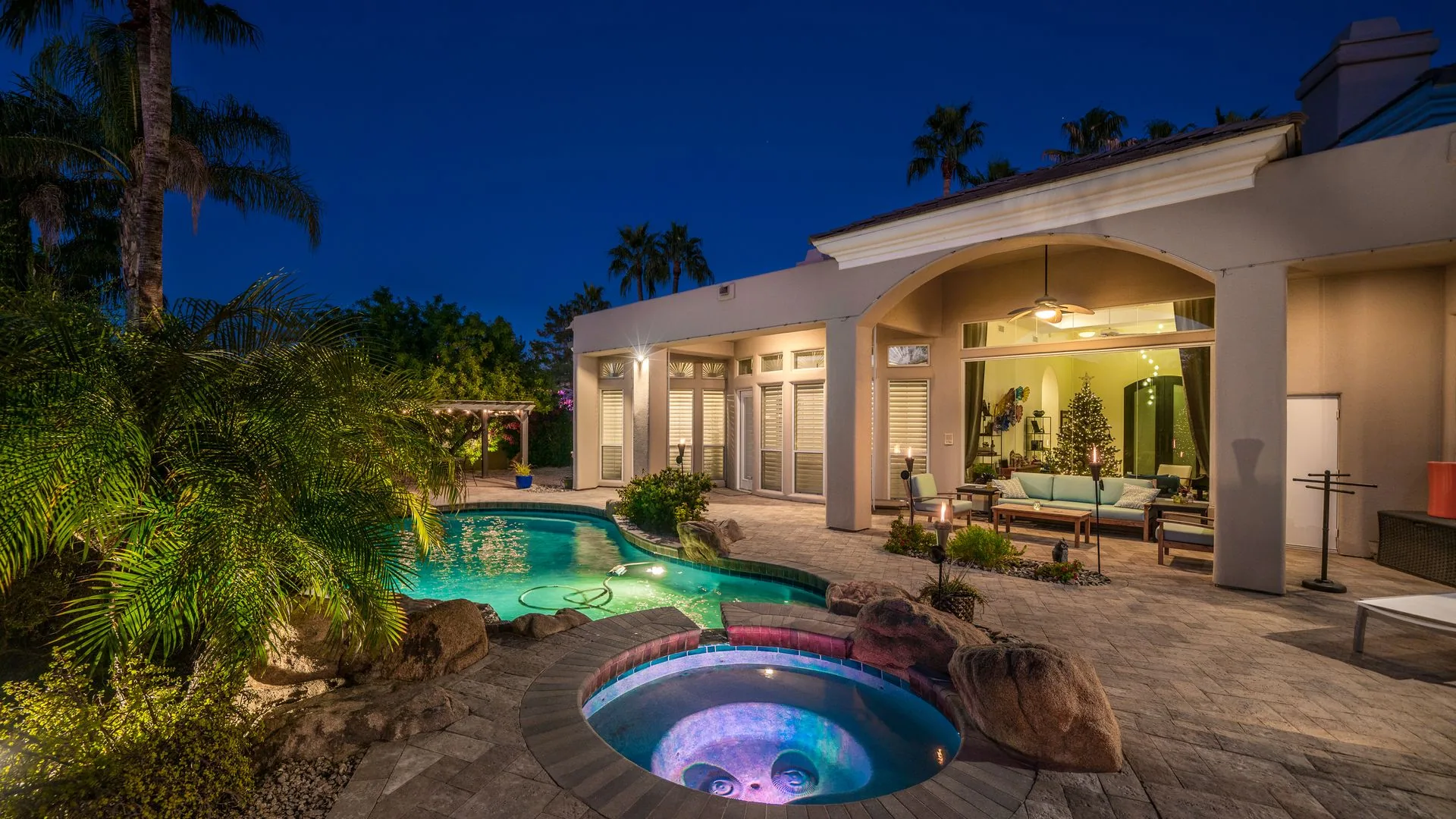
Outdoor Entertaining Space: Kitchen, Shade, Seating
September 25, 2026 · By Diamond Cut Landscaping

Your outdoor entertaining space in Phoenix can end up being the spot everyone naturally drifts toward, but it only works when it’s planned like a real room, not a weekend shopping list. Out here, the sun is intense, the summer heat is no joke, monsoon winds show up uninvited, and hard water leaves its mark on anything that splashes. If you design for those realities from day one, you get a backyard that feels easy to use, comfortable for guests, and simple to maintain.
We’re Diamond Cut Landscape, a family-owned design-build team based in Phoenix. When you ask us what makes a backyard great for hosting, we keep coming back to the same three building blocks: a kitchen that actually functions, shade you can rely on, and seating that’s set up in zones so people can mingle without getting in each other’s way.
Outdoor entertaining space planning starts with zones, not shopping
If you’ve ever tried to host while people are cutting through your “grill area” to reach the drinks, you already know why layout matters. The most expensive misstep we see is buying appliances or furniture first, then trying to force the patio to fit around them. It usually leads to awkward walk paths, cramped corners, or the grill jammed into the windiest spot in the yard.
A cleaner approach is to map your hosting flow first, then build the backyard around it. The zone-based approach is also covered in Nelson Landscaping’s guide to planning an outdoor entertainment area by function, and the concept translates well to Phoenix when you add shade and heat into the equation.
Most backyards in the Valley work best with four simple zones:
- Cooking zone: grill island, prep counter, and a safe landing spot for hot trays
- Dining zone: close enough for easy serving, far enough that the cook is not boxed in
- Lounge zone: the “stay awhile” seating, ideally in real shade
- Transition zone: the walkways connecting the back door, kitchen, dining, and lounging
One practical test: imagine you’re carrying a platter with two hands. Can you move from kitchen to table without squeezing past a chair, stepping off the patio, or doing the sideways shuffle? If the answer is no, the plan needs a tweak before you build.
Outdoor entertaining space kitchen: set it up for real hosting
In a Phoenix backyard, an outdoor kitchen is less about showing off and more about making the evening feel effortless. You want a layout that keeps heat and smoke out of the main traffic lane, enough counter space to prep and serve, and storage that does not warp or fall apart after a couple summers.
When we design kitchens, we’re thinking about workflow first, then the “nice-to-haves.” Start with the pieces that keep you outside with your guests:
- Built-in grill with heat-safe landing space on both sides
- Generous prep counter for cutting, plating, and serving
- Sink for quick rinses, hand washing, and faster cleanup
- Outdoor-rated refrigerator so drinks are not an indoor scavenger hunt
- Weather-tough storage for tools, towels, and the stuff you always forget
Material choice is where Phoenix builds separate from “Pinterest builds.” We typically steer you toward stainless components, stone or concrete countertops, and powder-coated metal framing because they handle UV and heat better than wood-heavy setups. We also like to plan gas, electric, and water runs early, since nobody wants to cut a fresh trench through finished pavers later.
If you want to compare island shapes and layouts that fit Valley yards, take a look at our post on outdoor kitchen ideas and grill island designs in Phoenix.
Outdoor entertaining space shade: the difference between “pretty” and “usable”
Shade is what turns your outdoor entertaining space into something you’ll actually use from spring through fall, and it’s what makes summer hosting possible after sunset. Without it, people stand in the doorway, take one look at the sun on the chairs, and quietly migrate back inside.
We like to plan shade around the zones that matter most, usually the kitchen, dining, and lounge areas. The specifics vary, but the principle is the same: protect the spots where people spend time.
One Phoenix-specific tip that gets overlooked: don’t plan shade based only on the patio outline. Plan it based on sun direction. West-facing yards often need deeper overhead coverage and sometimes side shade to handle late-afternoon heat.
Outdoor entertaining space seating: create a few “hangout spots”
Seating is where your backyard starts to feel inviting. Not “we own chairs” inviting, but “everyone can settle in” inviting. The trouble happens when all the seating gets pushed into one clump, or when the best seats are stuck in full sun.
We like to design a few seating moments so your guests can choose their vibe:
- Dining seating: sized for your usual group, with enough clearance to walk behind chairs
- Lounge seating: arranged for conversation, not aimed at the grill like it’s a TV
- Bar seating: stools at the island so friends can chat with the cook without crowding prep space
For Phoenix durability, powder-coated aluminum and quality all-weather wicker do well. For cushions, solution-dyed outdoor fabrics hold color longer under UV and handle pool days and monsoon humidity better than basic blends. If you host a mix of small hangouts and bigger get-togethers, modular sectionals are worth a look since you can rearrange without buying a second set.
Hardscape and flow: keep feet off gravel and guests out of the cook zone
Hardscape is the floor plan of your backyard. It decides whether your outdoor entertaining space feels smooth and intentional or like you’re dodging obstacles with a plate of food. You want clear routes from the back door to the kitchen, from the kitchen to dining, and from dining to the lounge area, with enough width that two people can pass without doing the “who goes first” dance.
In Phoenix, we also build with monsoon drainage in mind. Flatwork that holds water turns into puddles, slippery spots, and stain magnets. If you’re weighing pavers versus travertine versus another surface, we cover the pros and planning considerations on our custom patios in Phoenix page.
Lighting for Phoenix nights: make the backyard feel finished after sunset
During summer, a lot of your best hosting happens after dark. Lighting is what turns the backyard into a usable space instead of a shadowy patio with one bright wall light. Forbes also calls out lighting as a key part of outdoor entertaining trends in their piece on outdoor entertaining design trends, and we agree with the core idea: plan lighting early so it’s integrated, not tacked on.
A simple layered LED plan usually covers everything you need:
- Task lighting at the grill and prep area so you can cook safely
- Ambient lighting under a cover or pergola to keep the space welcoming
- Path lighting for walkways, steps, and edges to prevent trips
- Accent lighting to highlight a feature wall, a desert tree, or a water feature
Budget ranges: what outdoor entertaining upgrades cost in Phoenix
Pricing in the Valley can swing based on access, demolition, utility distances, and finish choices. Still, it helps to have realistic starting points so you can plan without guessing. Here are ballpark ranges we commonly see for design-build projects around Phoenix:
- Basic built-in grill island: roughly $8,000 to $20,000+
- Mid-range outdoor kitchen with grill, prep, storage, fridge, and sink: roughly $20,000 to $45,000+
- Pergola or shade structure: roughly $6,000 to $25,000+ depending on size and roofing
- Patio and hardscape expansion: roughly $10,000 to $40,000+ depending on materials and square footage
- Low-voltage LED lighting package: roughly $2,500 to $12,000+ depending on zones and fixtures
If you want to protect your budget, the best move is planning the full outdoor entertaining space first, even if you build it in phases. That keeps you from paying twice for work like trenching through finished areas or redoing a patio because the shade line stops short of where people actually sit.
FAQ: Outdoor entertaining space planning in Phoenix
How big should an outdoor kitchen patio be?
A comfortable starting point is the island footprint plus at least 4 feet of clear circulation space in front of the cooking and prep side. If you add bar seating, plan extra clearance behind stools so guests can slide in and out without blocking the main walkway.
What shade option works best for Phoenix summers?
For maximum summer usability, a solid patio cover or attached ramada usually performs best because it delivers consistent shade and supports fans and integrated lighting. Pergolas can work well too, but they often need added sun-blocking to feel comfortable in peak heat.
Where should seating go in an outdoor entertaining space?
Put your main lounge seating in shade and within easy conversational distance of the kitchen, but not so close that smoke or heat blows into guests. Dining should be close enough for serving, and your transition paths should connect everything without cutting through the cook zone.
What materials hold up best outdoors in Arizona?
For kitchens and furniture, UV- and heat-tolerant materials like stainless steel, stone or concrete, and powder-coated metal tend to last longer. For cushions, solution-dyed outdoor fabrics fade less, and quality covers go a long way during summer sun and dusty monsoon weather.
Should I plan lighting early or add it later?
Plan it early whenever you can. Running wiring and placing fixtures is easier and typically cheaper during hardscape and shade construction than it is as a retrofit after everything is finished.
Conclusion: build your outdoor entertaining space once, then use it constantly
A Phoenix-friendly outdoor entertaining space is not about copying a magazine photo. It’s about a layout that makes sense when you’re actually hosting, a kitchen that supports the way you cook, shade that keeps people outside, and seating zones that feel natural.
If you want a hand pulling it all together, reach out through our outdoor living consultation contact page. We’ll talk through your yard, your sun exposure, and how you like to host, then help you map out a plan that fits Phoenix heat and real-life weekends.