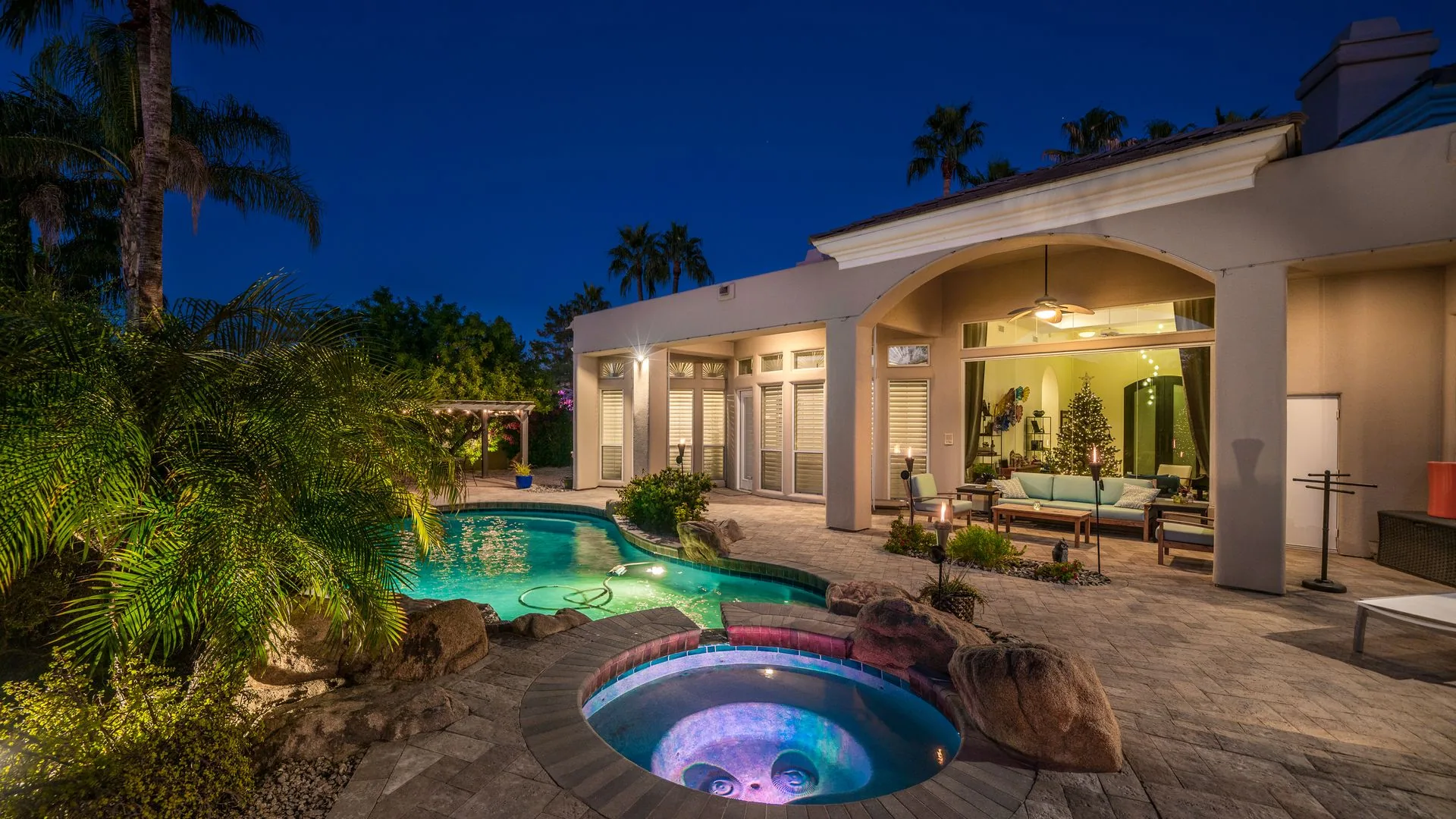
Patio Roof Ideas for Phoenix Backyards That Stay Cool
August 7, 2026 · By Diamond Cut Landscape

Patio roof decisions show up fast in Phoenix. The first time you try to sit outside at 4 p.m. in July, you find out whether your patio is a hangout spot or a heat trap. When you get the roof right, the space feels calmer, surfaces stay more touch-friendly, and you can actually use fans, lighting, and a grill area without baking.
We build outdoor living spaces across the Valley, so we see what holds up through 110°F days, UV, dust storms, and monsoon dumps. Below are patio roof ideas that make sense for Phoenix homes, plus the local planning details that save you from rework later.
Why a patio roof matters so much in Phoenix
Phoenix is not the place to “see how it goes” with shade. A south- or west-facing patio can take direct sun for hours, and that low afternoon angle sneaks under a lot of basic covers. Before you pick a style, you want to understand your orientation and when the sun hits your seating zone. Guidance on planning patio shade around orientation is solid anywhere, but it matters extra here because our summer sun is relentless.
A good patio roof also protects the investment you already made. It helps:
- Reduce surface punishment on pavers, sealers, and outdoor furniture
- Make add-ons practical like ceiling fans and integrated lighting
- Turn the patio into a real “room” instead of a strip of concrete you avoid half the year
Patio roof extensions (attached) for dependable all-day shade
If your goal is true, consistent cover, an attached solid patio roof is usually the workhorse option. You get continuous overhead shade with no slats and no “sun stripes,” and the structure is strong enough for ceiling fans, recessed lights, and a clean finish that looks like it belongs with the house.
Where Phoenix installs get won or lost is the connection to the home. We pay attention to:
- Flashing and waterproofing at stucco and roof transitions
- Slope and drainage so monsoon water moves away from the home, not toward it
- Heat and glare management through roof material and color choices
On a practical level, this is also the easiest patio roof style to “finish” into a true outdoor living space, especially when you are also upgrading your surface with custom patio design and installation.
Pergola patio roof ideas: open-beam vs. louvered shade
Pergolas are popular in Phoenix because they can feel light and modern while still framing a space. The tradeoff is shade density. An open-beam pergola gives you filtered light and airflow, which can be perfect on an east-facing patio or in our shoulder seasons. But if your patio faces west, open beams often fall short once summer hits and the sun drops low.
If you want control, a louvered pergola is a different animal. You can tilt the louvers to chase shade during the day, then open them up when the weather is nice. That adjustability is why many homeowners consider it a “best of both worlds” patio roof idea for Phoenix backyards.
One quick note from the field: whatever pergola route you choose, plan wiring early if you want fans, downlights, or a motorized system. It is much cleaner (and usually cheaper) to hide electrical runs during the build than to bolt conduit on later.
Lean-to patio roof designs that handle monsoon drainage
A lean-to, also called a shed-style cover, is one of the simplest patio roof shapes and one of the most practical for monsoon season. That single slope moves water quickly, which matters when a storm goes from calm to downpour in minutes. It also fits a lot of Phoenix architecture, from newer contemporary builds to updated ranch homes.
If your patio has ever turned into a shallow lake during monsoon season, that is your cue to think beyond “shade” and treat drainage as part of the design. This is where roof pitch, gutters, scuppers, and where the water exits the yard all deserve a real plan.
Freestanding patio roof structures for pools and outdoor kitchens
If your main hangout zone is not right off the back door, a freestanding cover can be the right call. Think: shade over the pool deck, a separate dining area, or a dedicated outdoor kitchen zone where everyone gathers. A freestanding structure lets you put shade where you actually need it, not just where the house makes it convenient.
In the Phoenix metro, the “hidden” work is what makes these succeed:
- Footings and anchoring sized for wind events and dust storms
- Smart placement so the cover blocks peak sun without choking airflow
- Utilities planned up front for lighting, fans, and cooking zones
If you want the pavilion to cover a grill or full cooking setup, we design it as one system so the roof, clearances, and layout work together. That ties in nicely with our built-in grill installation work when the goal is an outdoor kitchen that feels intentional, not improvised.
Budget-friendly patio roof ideas: shade sails and canopies
Shade sails can be a smart stepping stone. They are affordable, fast to install, and useful for “testing” where you want shade before you commit to a permanent structure. The downside in Phoenix is that fabric shade is often better at blocking UV than stopping radiant heat. In peak summer, you might still feel like the air under the sail is warm and bright.
Sails also need a wind plan. We recommend solid mounting points and a habit of taking sails down when storms roll in.
Patio roof materials that perform better in the Sonoran Desert
Materials are where Phoenix patios can either stay comfortable or quietly collect heat all day. You are not just picking a look. You are choosing what sits above you in full sun for months at a time.
- Cool-finish metal roofing: A reflective finish and lighter colors can help reduce heat gain. If you are curious why this works, the U.S. Department of Energy guidance on cool roofs breaks down the basics in plain language.
- Aluminum framing: Great for low maintenance and clean lines. It pairs well with modern pavers and contemporary home styles.
- Wood structures: Wood can look amazing in a desert landscape, but it needs the right sealing and realistic maintenance expectations under our UV.
- Polycarbonate panels: These can bring in light while blocking UV, but in Phoenix we usually lean toward tinted or opaque options to avoid that greenhouse feeling.
We can help you choose finishes that match your home while keeping an eye on temperature, glare, and long-term upkeep.
Quick comparison: which patio roof idea fits your backyard?
Phoenix patio roof planning: sun angles, wind, drainage, and permits
Before you fall in love with a design, it helps to run through a few local reality checks. These are the things that decide whether a cover feels great year-round or becomes a constant tweak-and-fix project.
- Orientation: West and south exposures usually need solid coverage or louvers that can fully close to block late-day sun.
- Drainage: Roof slope, gutters, and where the water exits the yard matter. Monsoon storms will test every shortcut.
- Wind: Sails and freestanding structures should be anchored and built for storm gusts, not just calm-season breezes.
- Permits and HOA rules: Many permanent patio roofs require permits, and HOAs often have requirements for height, colors, and placement.
Our design-build process helps because the cover is not treated like an add-on. We coordinate the roof, patio surface, drainage, and electrical so everything looks clean and functions the way it should.
What patio roofs cost in Phoenix (realistic budget ranges)
Pricing depends on size, access, attachment details, finishes, and whether you are adding fans, lighting, or a cooking zone. Here are Phoenix-market ballparks for installed projects, assuming proper footings and permitting where required.
- Shade sails: about $800 to $3,500 depending on size, hardware, and mounting complexity
- Open-beam pergolas (wood or aluminum): about $6,000 to $18,000 depending on materials and footprint
- Louvered pergolas: about $15,000 to $35,000 plus electrical, depending on size and features
- Attached solid patio roof extensions: about $18,000 to $45,000+ depending on roofing, tie-in complexity, and finish work
- Freestanding pavilions: about $20,000 to $55,000+ depending on structure, roof type, and utilities
If you are already planning a new patio surface, it is often more efficient to place footings and run conduit before the final pavers go down. That is one of those “do it once” decisions you will be glad you made.
Small upgrades that make your covered patio feel cooler
Shade is step one. Comfort comes from stacking a few simple choices that work with our climate.
- Ceiling fans: Make sure the structure is designed to carry the load and that power is planned from the start.
- Layered lighting: Task lighting for cooking, softer light for seating, and path lighting so the yard feels connected at night. If you want a clean, low-glare setup, take a look at our LED landscape lighting service.
- Heat-smart surfaces: Lighter pavers and a well-built base help reduce hot spots and keep drainage predictable.
FAQ: Patio roof ideas and covered patio planning in Phoenix
Do you need a permit for a patio roof in Phoenix?
Most permanent structures do, especially anything attached to the home or built with footings and a roof system. Requirements vary by city across the metro, and HOAs can add their own rules. We help you understand what applies to your property before construction starts.
What patio roof works best for a west-facing backyard?
A west-facing patio usually needs solid cover or a louvered system that can fully close in the afternoon. Open-beam pergolas tend to let too much sun through when the sun is low and intense.
Are shade sails enough for Phoenix summers?
They help with UV protection and can make mornings and evenings more pleasant, but they usually do not block radiant heat like a solid patio roof. Many homeowners use sails as a temporary solution or as a supplement over specific areas.
Can you add a patio roof over existing pavers?
Sometimes. It depends on the paver system, base prep, and where the footings need to land. Often we can remove pavers where footings go, pour concrete, then relay the pavers so it looks seamless.
What is the lowest-maintenance patio roof option?
Aluminum or steel-framed systems with durable finishes are typically low maintenance in the desert compared with wood. The best fit still depends on your home style, how much shade you want, and whether you want adjustability.
Conclusion: Pick a patio roof that matches Phoenix reality
If you want a backyard you will actually use from late spring through early fall, build your plan around real overhead shade, not wishful thinking. For many Phoenix homes, that means an attached solid cover or a louvered pergola, with drainage and wind anchoring handled correctly from day one. When you are ready to talk through patio roof ideas for your yard, reach out through our design consultation contact page and we will help you map out a shade plan that looks good and holds up in the Valley. For more ideas and inspiration on enhancing your outdoor spaces, check out our guide to modern outdoor living trends on our blog.