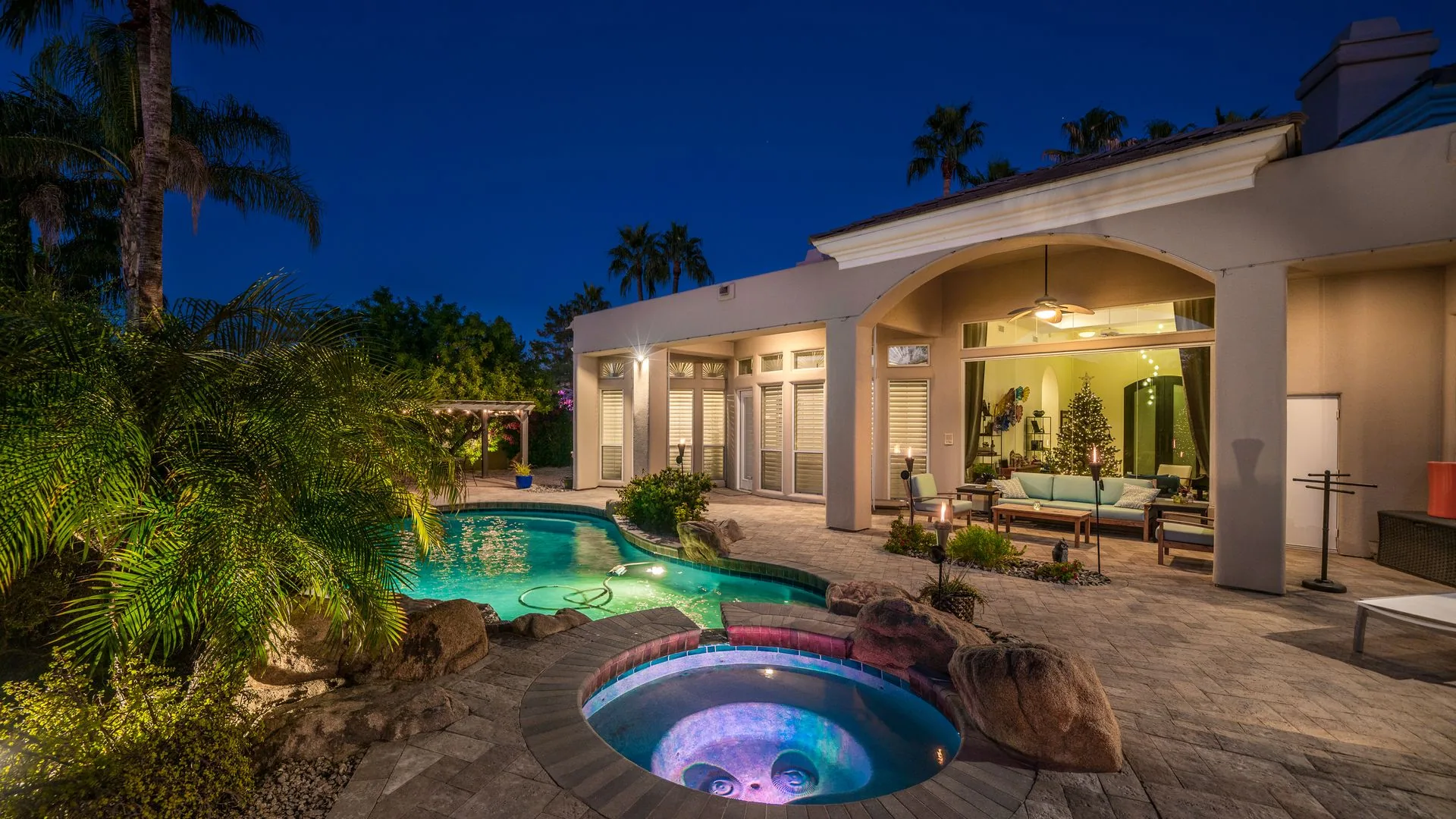
Paver Patio Designs for Phoenix Backyards That Stay Cooler
August 4, 2026 · By Diamond Cut Landscape

Paver patio designs can be the difference between a Phoenix backyard that sits empty all summer and a space you actually enjoy when the sun backs off in the morning, the evening, and the shoulder seasons. Around here, anything hard and dark can feel like a griddle by mid-afternoon, and our soils and monsoon bursts love to test how well something was built. The goal is simple: give you a patio that looks great, drains right, handles movement, and feels noticeably more comfortable underfoot.
Why paver patio designs make sense in Phoenix compared to a single concrete slab
You have probably seen it: a poured concrete patio looks fine at first, then a year or two of heat cycles and a couple monsoon seasons later, cracks start showing up. In parts of the Valley you can also run into soils that shift or settle, so one big slab can end up telegraphing those changes.
With interlocking pavers, you are not betting everything on one piece. If a section ever settles, you can pull pavers, fix the base, and put the same units back. That repairability is a big reason we like pavers for Phoenix yards. Manufacturers also call out how well pavers perform in high-traffic outdoor areas and hot climates, which Belgard covers in its overview of patio paver performance in heat and high-traffic spaces.
Cooler paver patio designs start with color and texture (your feet will notice)
If you take one thing from this post, let it be this: color choice matters in Phoenix. Dark pavers soak up heat and hold it. That looks dramatic on a design board, but in full sun it can be uncomfortable fast.
- Most comfortable color families: sand, buff, light tan, warm gray, and soft desert blends
- Use carefully in full sun: deep charcoals and dark browns, especially in large uninterrupted areas
- Design trick that still gives contrast: keep darker tones to a border, a band, or an inlay so you get the look without turning the whole patio into a heat sink
Texture helps too. A lightly textured surface can feel a bit less slick around a pool and tends to hide dust better, which is a real everyday win here. If you are considering travertine, it is popular in the Phoenix market for a reason: it pairs well with desert-modern homes and can feel cooler than many manufactured surfaces. Martha Stewart’s roundup of travertine-forward paver patio material ideas offers a good visual sense of why homeowners keep coming back to it in warm climates.
Modern paver patio designs: large-format pieces and that “outdoor room” feel
If you like clean lines, large-format pavers are hard to beat. Think 24x24 slabs or oversized rectangles. Fewer joints give the patio a calmer look, and it reads more like a finished room than a traditional brick pattern.
One of our favorite ways to make this work in Phoenix is to coordinate your patio color with what you already have indoors. When the tones play nicely together, stepping outside feels more like an extension of your home, not a separate zone. Better Homes & Gardens highlights this idea in its collection of paver patio ideas that create a cohesive indoor-outdoor look.
Large-format pavers can be a great fit for lounge areas and covered patios. For spots that see heavier rolling loads, like where a grill cart lives or where you wheel planters around, pattern choice becomes even more important.
Paver patio designs and patterns that stay tight in Phoenix yards
In the Valley, patio patterns are not just about style. They affect how the surface handles movement and daily wear. If you have a busy household, kids running in and out, or you entertain often, you want a pattern that locks together and spreads loads well.
That is why we lean on herringbone so often for high-traffic areas. It is a classic for a reason. Unilock does a solid job explaining why certain layouts hold up better in its guide to patio paver patterns for durability and design.
- Best all-around for stability: herringbone in walkways, dining areas, and main traffic paths
- Clean and modern in the right spots: running bond or stacked bond for lower-traffic lounge zones, especially with large-format pavers
- Easy way to add personality: a soldier-course border, a contrasting band, or a simple inlay that ties into your home colors
Backyard layouts that actually get used: build your patio in zones
The patios that get the most use usually are not one giant rectangle. They are set up like an outdoor living room, with clear zones that match how you move through the space. This matters even more in Phoenix because shade is precious. When you zone your patio, you can put coverage where it counts.
- Lounge zone: the “everyday” spot for coffee, reading, or a quick sit down after work
- Dining zone: close to the back door so carrying food is easy and you are not weaving through furniture
- Cooking zone: a dedicated pad for a grill or full outdoor kitchen, with breathing room for prep and guests
- Pool transition zone: comfortable paths for bare feet and a surface that handles splashes
When you want ideas for how pavers, planting, and hardscape features can come together as one plan, take a look at our Phoenix-area landscape and hardscape project gallery. It is a quick way to see what different shapes, borders, and color blends look like on real homes in the Valley. For more tips on transforming your backyard, be sure to read our blog post on how to add curb appeal to your yard.
Shade and cooling upgrades that make paver patio designs feel better in summer
Even the coolest-toned paver will get hot in full sun at 3 p.m. in July. The patios that feel the best are the ones where shade was part of the plan from the start. You do not need to cover every inch, but you do want to protect the parts you will actually use.
- Pergola or solid patio cover: best over seating or dining so the space earns its keep every day
- Desert-adapted canopy trees: placed to block late-afternoon sun without wrecking your patio with aggressive roots
- Water feature nearby: not a miracle cooler, but the sound and localized feel can make the space more pleasant
- Low-voltage LED lighting: helps you enjoy the patio when temperatures finally drop, and improves safety along steps and edges
If you are thinking about adding overhead shade, our pergola design and installation services in Phoenix page walks through common material options and how we approach placement based on real sun angles in the Valley.
The build details that decide whether your Phoenix paver patio lasts (base, drainage, edge restraint)
Here is the unglamorous truth: the best-looking pavers in the world will fail if the base is rushed. Phoenix conditions make this especially important. You have intense heat, occasional heavy downpours, and soil that can move depending on the neighborhood. That combination demands good compaction and smart drainage.
Most residential patios need a properly compacted crushed aggregate base, often in the 4 to 6 inch range depending on site conditions, then a bedding sand layer, then pavers, then joint sand. We also set grade so water drains away from the home and does not pond along edges after a storm.
If you want to compare surfaces and see how we approach construction, our custom patio installation services page breaks down common patio options we build across the Phoenix metro.
What paver patio designs cost in Phoenix: realistic installed ranges
Patio pricing in Phoenix is tied to more than square footage. Access to the backyard, demo of an old slab, base depth, drainage needs, cuts around curves and columns, and the features you add all move the number.
- Concrete paver patio installed: often around $18 to $35 per square foot for many Valley projects
- Travertine patio installed: often around $25 to $45+ per square foot, depending on thickness, pattern, and detail work
- Common add-ons that change the total: steps, seat walls, lighting, drainage upgrades, pergolas, outdoor kitchens, and water features
If you are deciding where to spend and where to simplify, we will tell you the same thing we tell our neighbors: do not skimp on the base and drainage. A patio that stays flat and drains right will feel like a bargain years from now.
FAQ: Paver patio designs for Phoenix heat
Do pavers stay cooler than poured concrete in Phoenix?
Often they do, especially when you pick lighter colors and avoid large dark fields in full sun. Pavers also give you more options for mixing materials, adding shade structures, and repairing small areas without tearing out everything.
What paver color is best if you walk barefoot?
Go lighter. Sand, buff, tan, and warm gray blends are typically easier on bare feet than dark solids. If you love a darker accent, keep it to a border or detail band.
Is travertine worth it for Phoenix backyards?
It can be, if you want a premium look and a surface that tends to feel cooler. It costs more than many concrete pavers and it needs careful installation, but it fits the desert style beautifully.
What paver pattern holds up best for heavy use?
Herringbone is one of the strongest patterns for traffic because it interlocks well and spreads loads. It is a practical choice for dining areas, walkways, and anywhere you roll furniture or grills.
How do you keep weeds out of the joints?
A tight install, proper edging, and polymeric sand do most of the work. Then it is basic upkeep: blow off debris, rinse as needed, and stay on top of the first few weeds after monsoon rains before they get comfortable.
Conclusion: your patio should feel good, not just look good
The best paver patio designs for Phoenix come down to a few smart calls: choose lighter, heat-friendly colors, use stable patterns where traffic is heavy, build the base for real Valley soil and storm conditions, and plan shade like it is part of the patio, not an afterthought. If you want help mapping out a patio that fits your home and the way you actually use your yard, request a design consultation through our Diamond Cut Landscape consultation request form.