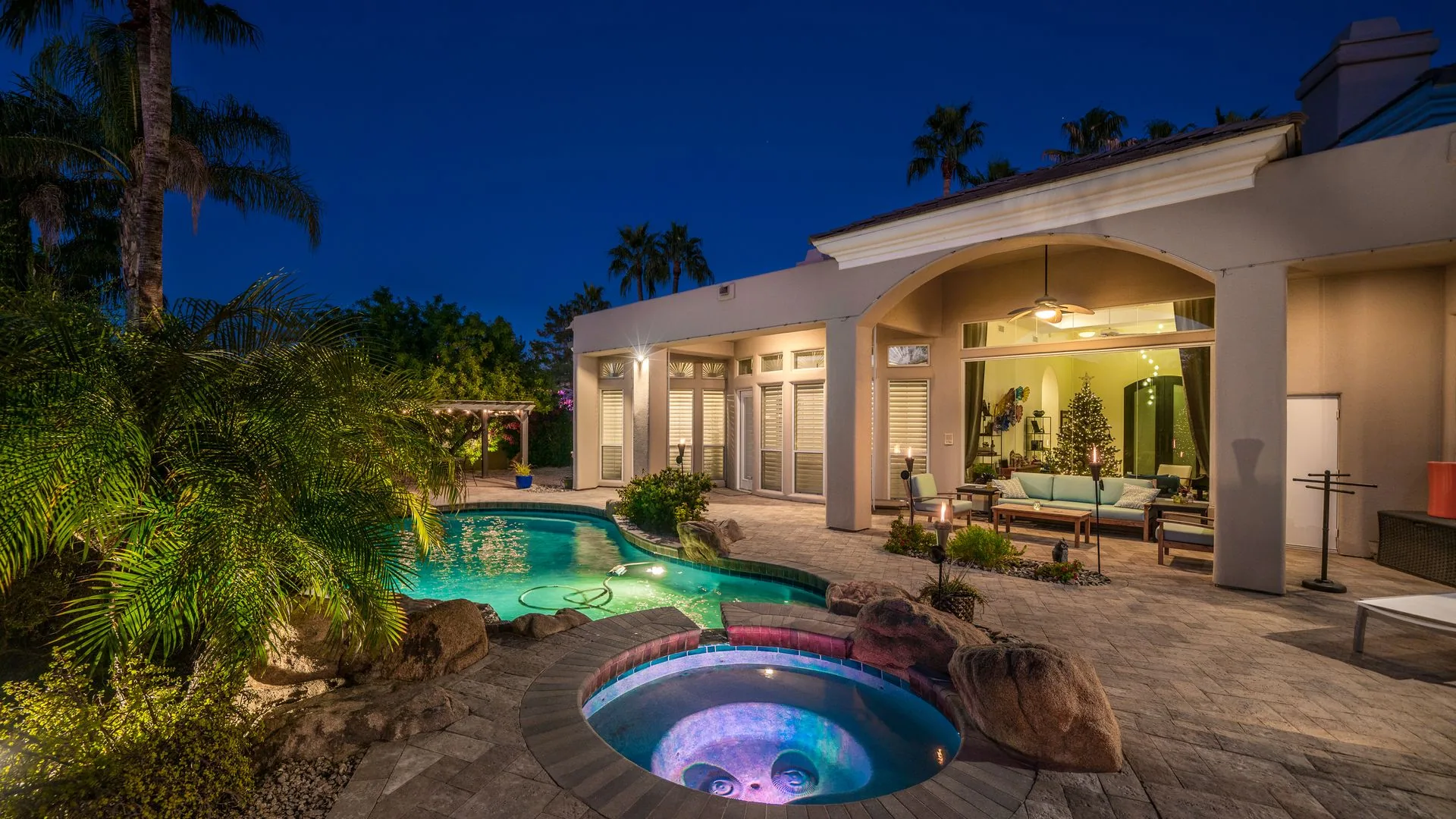
Porcelain Pavers vs. Travertine vs. Concrete Patios in Phoenix, AZ
August 5, 2026 · By Diamond Cut Landscape

Porcelain pavers vs. travertine vs. concrete patios is one of those comparisons that sounds simple until you live through a Phoenix summer on a bare backyard surface. Your patio has to deal with daily UV, triple digit afternoons, hard water overspray, and that quick hit of monsoon rain that turns dusty patios slick in minutes. We build patios all over the Valley, so we look at what holds up in real life, not just what looks good in a showroom.
When you work with us at Diamond Cut Landscape, we help you pick a material that fits how you actually use your yard. That means thinking about shade, drainage, soil movement, foot traffic, pool splash, and whether you are honestly going to keep up with sealing and special cleaners once the project is done.
Porcelain pavers vs. travertine vs. concrete patios: what Arizona will test first
In Phoenix, patio materials get judged fast. A surface can look great on install day, then start showing problems after one monsoon season or one July of full sun. Before you fall in love with a color or pattern, these are the Valley realities we plan around:
- Heat and glare: color matters, but finish and texture matter too. A shiny surface can feel brighter and less comfortable than you expect.
- UV exposure: some finishes fade or get blotchy after years of sun.
- Monsoon traction: wet patios around pools and outdoor kitchens need grip, not polish.
- Stains and hard water: sunscreen, BBQ grease, rust from furniture, and mineral deposits are common here.
- Soil movement and drainage: the Valley’s soils and temperature swings can stress rigid surfaces if the base and drainage are not handled right.
Porcelain pavers in Phoenix: clean look, tough surface, lighter maintenance
If you like a crisp, modern finish and you want your patio to stay that way without a lot of babysitting, porcelain pavers are hard to ignore. Outdoor-rated porcelain is dense and non-porous, so it does not soak up water the way many natural stones do. That helps when you have irrigation mist, monsoon puddles, and mineral-heavy water trying to leave a mark. If you want a deeper dive on the durability and style benefits, reputable guides like Cincinnati Landscaping’s review of modern porcelain pavers offer helpful insight.
Traction is a big part of the conversation too. Many exterior porcelain options are made with slip-resistant textures specifically for outdoor use. If your patio sits near a pool or you entertain a lot during monsoon season, that texture can be the difference between “fine” and “why does this feel sketchy when wet.” For a product overview, you can see some outdoor-rated porcelain paver options from Daltile.
Heat is the question everyone asks, and it is the right question. Any hard surface in full sun is going to warm up. With porcelain, your color choice does a lot of the heavy lifting. Light, sand, and limestone tones usually feel more forgiving than charcoal or espresso shades. If you know you want darker colors, we typically steer the design toward shade first, then the surface.
Another practical perk: porcelain generally does not need sealing. In Phoenix, sealers take a beating from UV, and even a good sealer becomes one more item on your maintenance list. If you want a patio that is easy to rinse off after a weekend cookout, porcelain is often the low-drama option.
Where porcelain pavers shine, and where we pause
Porcelain pavers are a solid fit for patios, pool decks, and outdoor dining zones. They also give you a lot of design flexibility: clean large-format layouts, stone-look patterns, even wood-plank looks that feel surprisingly convincing once they are installed.
That said, we are always straightforward about the trade-offs:
- Upfront cost is usually higher than basic concrete pavers.
- Installation precision matters. The base, leveling, and cutting need the right tools and an experienced crew.
- Not our first pick for vehicle areas. For driveways and heavy loads, concrete pavers designed for that purpose are typically the better fit.
Travertine patios in Arizona: classic resort feel, but you will do more upkeep
Travertine is popular around Phoenix pools for a reason. It has a timeless, natural look that fits everything from a Spanish-style home in Scottsdale to a modern backyard in Gilbert. It is also often comfortable underfoot, especially in lighter tones, which is a big deal when the sun is bouncing off your patio at 4 p.m.
The honest catch is maintenance. Travertine is porous, and porous materials show real life faster. We see stains from:
- BBQ grease and food spills
- Sunscreen and pool chemicals
- Pet accidents
- Hard water overspray and mineral deposits
To keep travertine looking sharp, you will typically plan on regular sealing and gentle cleaning. You also need to be mindful with acidic cleaners, since limestone-based stone can etch. Over time, you may see small pits or chips in high-traffic routes or under heavy furniture. And if you ever need to replace a few pieces, matching can be tricky because stone varies from batch to batch.
If you love the natural-stone vibe and you are fine with staying on top of sealing, travertine can be a great choice. We especially like it for covered patios, shaded courtyards, and areas where the surface is not constantly taking pool splash and full-sun exposure.
Concrete patios and concrete pavers: value and versatility, with a few Arizona caveats
Concrete pavers are a staple in the Phoenix metro because they are versatile and they make sense for a lot of budgets. They are also a practical choice for heavier-use areas, including driveways. If a paver settles or cracks, you can usually replace that section without tearing out the whole surface.
Concrete does come with a few local caveats:
- Heat: mid-tone and dark concrete can get brutally hot in summer sun. Shade planning is not optional if you want barefoot comfort.
- Porosity: concrete is usually more porous than porcelain, so sealing helps with stains and color retention.
- Stamped concrete cracking: stamped slabs can look great at first, but in Arizona, cracking is common over time due to soils, drainage, and temperature cycling. Repairs are rarely invisible.
Phoenix cost ranges: what you will usually budget
Patio pricing in the Valley depends on access, demo, drainage fixes, base prep, the pattern you choose, and the grade of material. Still, you deserve a realistic starting point. For installed projects around Phoenix, you will often see ranges like these:
- Concrete pavers: about $18 to $30+ per square foot installed
- Travertine: about $25 to $45+ per square foot installed, plus long-term sealing costs
- Porcelain pavers: about $28 to $55+ per square foot installed, depending on brand, size, and install method
The part many homeowners miss is the long game. In our climate, recurring sealing, stain cleanup, and occasional repairs can turn a lower upfront price into a higher total cost over 10 to 15 years. If you are already investing in shade, lighting, planting, and an outdoor kitchen, it often makes sense to choose a surface that keeps your future to-do list short.
How we help you choose the right patio paver material for your yard
We start with how you live. Are you picturing pool days and barefoot traffic? Do you grill a lot? Do you want a clean modern look that ties into your interior finishes, or do you want natural stone character that feels a little more Southwest?
From there, we design the patio as part of the full outdoor system, not a stand-alone pad. That means we consider drainage and grading, lighting placement, irrigation overspray, and how the patio connects to walkways, turf, or desert planting. If you want to dig into options, take a look at our custom patio design and installation and our hardscape construction services for steps, walkways, and seat walls that make the space feel finished.
If you are still sorting through materials, you might also like our Phoenix landscaping blog, where we break down desert-friendly design choices in plain language.
FAQ: Porcelain pavers, travertine, and concrete in Phoenix
Are porcelain pavers too hot for Phoenix summers?
They can warm up in direct sun like any hard surface. You can make them more comfortable by choosing lighter colors and by adding shade with a pergola, patio cover, or smart tree placement.
Do porcelain pavers need to be sealed?
Most outdoor porcelain does not need sealing because it is non-porous. That is one reason it is popular for low-maintenance patios in the Valley.
Is travertine a bad idea in the Phoenix metro?
No. It is just a maintenance-aware pick. If you love real stone and you are willing to seal it regularly and clean it carefully, travertine can look incredible, especially in covered or shaded areas.
What is the most budget-friendly patio option?
Concrete pavers are usually the most cost-accessible option of the three, especially with a straightforward pattern. Plan for heat management and occasional sealing if you want better stain resistance.
Which patio material is best for monsoon traction?
Traction depends on the finish, but many outdoor-rated porcelain lines are made with slip-resistant textures. No matter what you choose, good drainage design is just as important as the surface itself.
Conclusion: pick the patio surface that matches how you want to live outside
If you want the strongest blend of durability and low maintenance in our desert climate, porcelain pavers are often the top pick for patios and pool decks. If you want natural stone character and a classic resort look, travertine can be worth it as long as you are comfortable with sealing and careful cleaning. If you are watching the budget or need a surface that can handle heavier loads, concrete pavers are a dependable choice, and stamped concrete is best approached with eyes open about long-term cracking in Arizona.
If you want help comparing finishes, planning shade, and designing a patio that works with your drainage and the rest of your backyard, schedule a consult through our Diamond Cut Landscape contact page. We will walk the property, talk through the pros and cons, and help you build a plan that holds up to Phoenix summers.