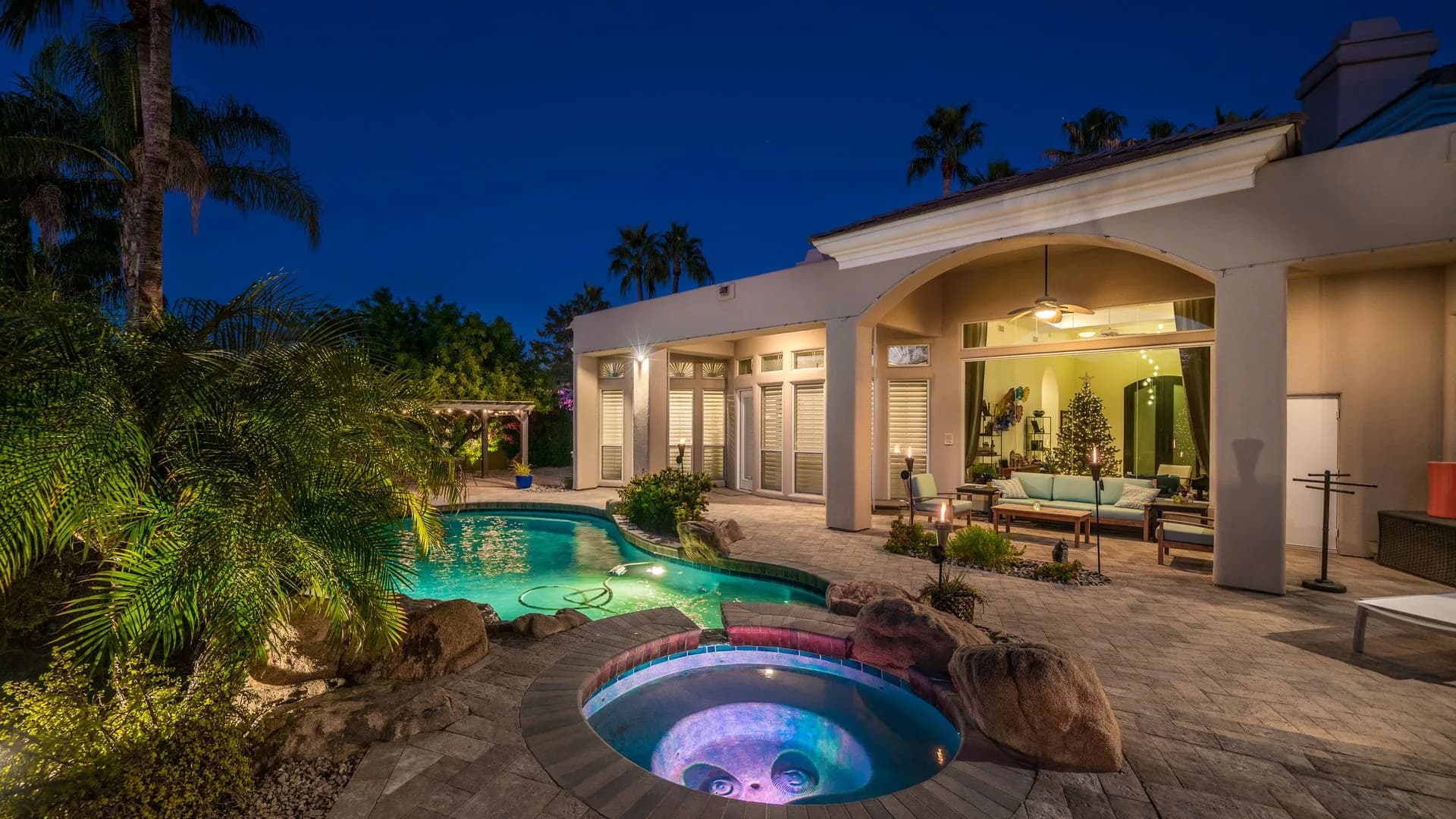
Rock Water Feature Ideas: Desert-Friendly Boulder Fountains
October 21, 2026 · By Diamond Cut Landscaping

Rock water feature ideas are one of our favorite ways to make a Phoenix yard feel more finished without fighting the desert. You get that easy, steady sound of moving water, plus real stone that looks right at home next to decomposed granite, boulders, and drought-tough plants.
Done well, a boulder fountain does not look “installed.” It looks settled, like the yard was designed around it from day one. Below, we will walk you through how these fountains work in our climate, which stones hold up best, where to place one so you actually enjoy it, and what upkeep looks like with Valley heat and hard water.
Why a rock water feature makes sense in Phoenix
Phoenix landscaping is all about materials that can take a beating. Long summer heat, dust, wind, and then monsoon rain that shows up all at once. A rock water feature checks a lot of boxes because it fits desert design naturally and it does not require the water commitment of turf or a full pond.
There is also the day-to-day payoff. When you are grilling under the patio cover or sitting out after sunset, that water sound takes the edge off nearby traffic and neighborhood noise. It is not magic, but it is noticeable. If you want the industry side of it, the CDC overview of noise and everyday exposure is a good reason why people might look for ways to soften background sound at home.
How a rock water feature works: the closed-loop boulder fountain
Most of what you see around the Valley is a boulder fountain, sometimes called a bubbling rock. It is a simple closed-loop setup: a pump pushes water up through a drilled opening in the stone, the water runs back down the face of the boulder, and everything drops into a hidden basin below grade where it recirculates.
That “hidden reservoir” is the reason it works well here. You are not constantly soaking soil or trying to keep a pond balanced. You mainly replace what you lose to evaporation and a little splash. Earth Stone & Rock has a helpful breakdown of how boulder fountains recirculate water through a hidden basin, and it lines up with how we build them in Phoenix.
Rock water feature ideas that look like they belong (not like an add-on)
In our experience, the difference between “nice fountain” and “wow, that fits” comes down to how the boulder sits in the grade. If a big rock looks perched on top of gravel, your eye catches it immediately. If it looks seated, like it has weight and history, it reads as natural.
- Set the boulder into the landscape: we lower it into the surrounding grade so it feels grounded, not staged.
- Disguise the basin edge: decorative rock, cobble, or river stone should flow out from the feature like it is part of the original layout.
- Use plants as the transition: agave, penstemon, desert grasses, and groundcovers soften the hard line between stone and open yard.
- Plan sightlines on purpose: you want to see the water from a kitchen window, living room, or the spot you actually sit outdoors.
If you are already planning hardscape, this is where it helps to design everything together. A rock fountain tucked beside a paver seating area feels intentional because it is. If you are mapping out your outdoor layout now, our custom patio design and installation service page shows the kind of coordination we do with elevations, finishes, and electrical runs.
Choosing the right rock for a rock water feature in Arizona
Not every boulder is a good candidate for drilling, and not every stone “reads” the same in bright Arizona sun. We look at two things at the same time: how the rock performs structurally and how it looks next to your home’s color palette.
Dense stone generally drills cleaner and holds up better over time. Basalt is a common choice for that reason, and it brings a bold dark tone that pops against desert plants.
Rock water feature placement: where you will actually hear it
A fountain can be gorgeous and still be a miss if you never hear it. In Phoenix, we usually recommend placing a rock water feature close to the spaces you use most, like a patio lounge, a pergola seating zone, or near the front entry where you see it daily.
- Near a seating area: the sound matters most when you are relaxing, not when you are standing across the yard.
- Visible from indoors: you should catch it from a main window, especially in summer when you are inside more.
- Smart sun and wind exposure: full afternoon sun and wind can increase evaporation, so we tune flow to keep water hugging the stone.
- Safe walking paths: no splash onto pavers, and no cords or edges that create trip hazards.
If you want to take a deeper look at feature types and layouts we build locally, our Phoenix water feature design and installation page covers options beyond bubbling boulders too.
Maintenance for a rock water feature in the Valley (simple, but real)
We will be straight with you: a boulder fountain is low maintenance, not zero maintenance. Phoenix gives you three main realities: evaporation, dust, and mineral-heavy water. That means occasional top-offs and periodic cleaning so the pump stays happy and the stone stays looking sharp.
- Top off the basin: summer heat can pull water down faster than you expect, especially if the feature is in full sun.
- Keep the pump intake clear: grit, leaves, and blown-in debris are normal here. A quick rinse prevents clogs.
- Watch for calcium scale: hard water can leave deposits on stone and inside plumbing over time.
- Check water level before you travel: pumps do not like running dry, even for a short time.
For water quality and why mineral deposits are common in desert cities, the U.S. Geological Survey explains what hard water is and what causes it. That is basically our day-to-day reality across much of the Phoenix metro.
What a rock water feature costs in Phoenix
Costs come down to boulder size, drilling, the basin and vault system below, access to your yard, and how “built-in” the feature is with lighting, planting, and hardscape. A simple bubbler tucked into a corner is a different job than a multi-boulder centerpiece that needs equipment to set safely.
- Small bubbling rock (simple install): $3,500 to $7,500
- Medium boulder fountain with upgraded basin and rockscape: $7,500 to $15,000
- Large feature boulder(s) with crane access, lighting, and full landscape integration: $15,000 to $30,000+
If you are bundling upgrades, it usually saves time and money to design it as one plan so electrical, drainage, elevations, and finish materials all line up. If you are still sorting priorities, take a look at our post on modern backyard ideas for Phoenix homeowners to help decide what will get used the most.
When professional installation matters (and why DIY can get expensive)
A rock fountain looks straightforward until you are dealing with real weight, tight access, and a basin that has to sit level and stable for years. The boulder has to be placed safely, the subgrade has to be prepped correctly, and the reservoir has to be sized so you are not topping off constantly.
Monsoon season adds another layer. If grades are off, runoff can carry silt straight into the basin and clog the system. If splash is not controlled, you lose more water to wind drift and evaporation. Those are the little “details” that decide whether you love the feature long term or feel like it is always a chore.
FAQ: Rock water features in Phoenix, AZ
Do rock water features waste water in the desert?
Not when they are built correctly. A boulder fountain is a closed-loop system, so you mainly lose water through evaporation and a bit of splash. You will still top it off during summer, but it is typically far less water than keeping turf alive.
How often do you need to add water to a boulder fountain?
In peak heat, you may add water every few days depending on sun exposure, wind, basin size, and the flow rate. In cooler months, it can stretch much longer.
Will hard water leave white buildup on the stone?
Over time, yes. Mineral deposits are common in the Phoenix area. Routine rinsing, occasional cleaning, and keeping the pump screen clear go a long way. We can also recommend fountain-safe products that will not damage the pump or plumbing.
Is a rock water feature loud?
It can be as subtle or as lively as you want. Most bubbling boulders give you a softer sound that feels best at close range. If you want more volume, we can adjust the flow and stone profile, but we still aim to keep splash under control.
Can you add LED lighting to a boulder fountain?
Yes. Low-voltage lighting is one of the best add-ons in Phoenix because evenings are when you use the yard most. We can highlight the water movement and texture without harsh glare.
Conclusion
A rock water feature is a smart, desert-friendly way to add motion and sound without turning your yard into a high-maintenance project. With the right stone, a properly sized hidden basin, and placement near the areas you actually use, a boulder fountain can feel like it belongs in your landscape, not like a decoration dropped on top.
If you want help picking the right approach for your space and budget, reach out through the Diamond Cut Landscape contact page and we will talk it through with you.