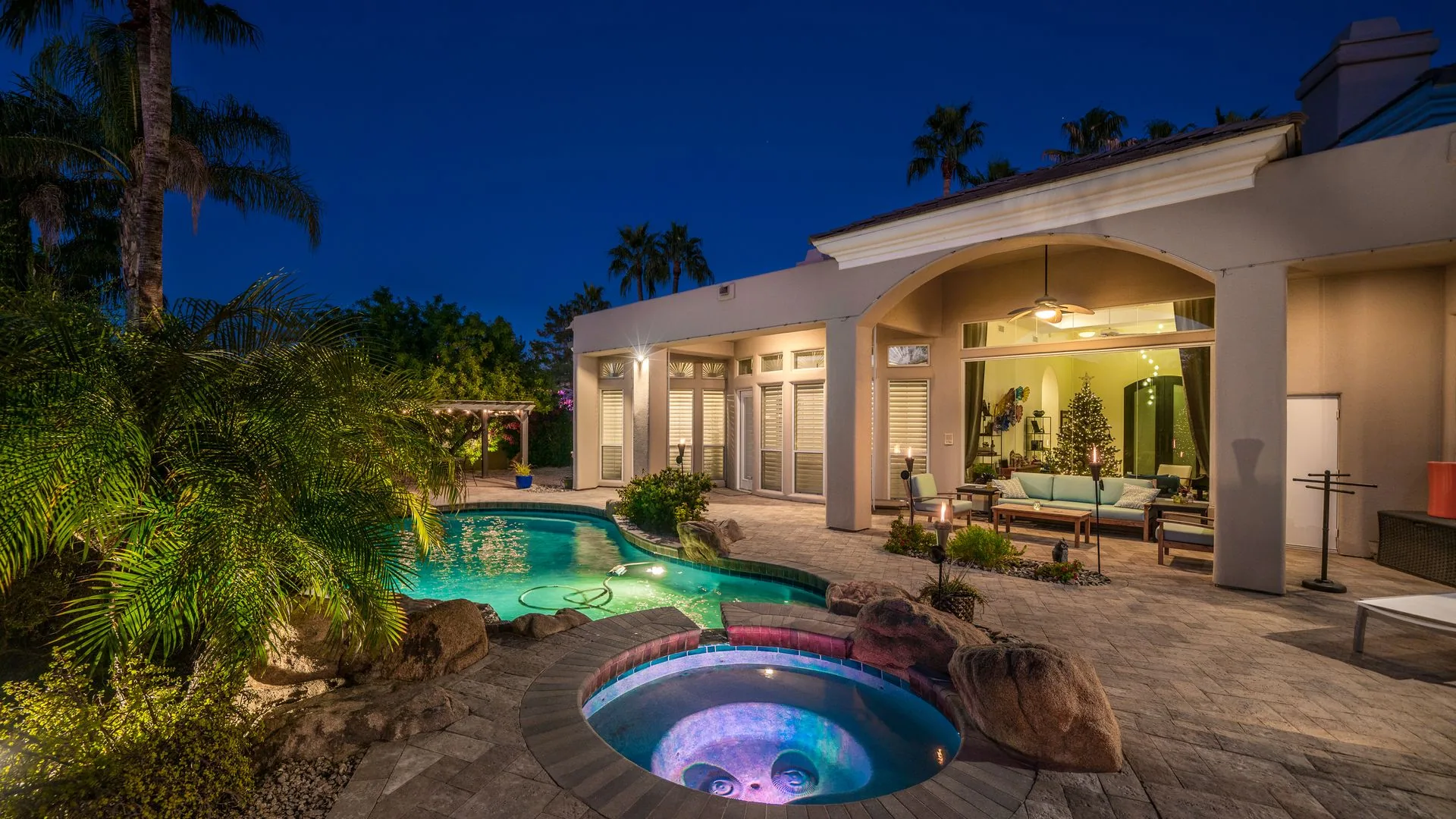
Drought Resistant Landscape Design for Phoenix Xeriscapes
September 21, 2026 · By Diamond Cut Landscaping

Drought resistant landscape design in Phoenix is not about settling for a yard that feels bare or “all rock.” It is about building something that looks finished, handles our heat, and does not keep you chained to a hose bib every weekend.
When you live in the Valley, you learn fast that a landscape has to do a lot at once. It needs to take full sun, reflected heat off walls and windows, alkaline soil, and those sudden monsoon blasts that send water racing across the yard. Our job at Diamond Cut Landscape is to pull all of that into one plan, so your plants, hardscape, grading, irrigation, and lighting work together instead of fighting each other.
Why a drought resistant landscape matters in Phoenix
If you are trying to cut water use at home, the yard is usually the first place to look. Outdoor irrigation can make up a surprisingly large share of household water use in dry climates, which is why a smart redesign can move the needle on your monthly bill and your maintenance load. The folks at Myrainplan’s overview of drought-resistant landscaping and outdoor water use explain how quickly outdoor demand can add up when landscapes are built around high-water habits.
There is also a comfort factor that does not get talked about enough. A well-planned xeriscape gives you shade where you actually sit, walking paths that stay clean, and planting beds that do not turn into muddy trouble spots every time the weather flips.
Xeriscape design basics for a drought resistant landscape (it is not just cactus)
People hear “xeriscape” and picture a yard that is nothing but gravel and a lonely saguaro. Real xeriscape design is more flexible than that. It is simply a set of planning principles that reduce water demand while keeping the yard attractive and usable. Colorado State University Extension lays out those fundamentals in its xeriscaping beginner’s guide, and the big takeaway is this: you start with a plan, then match plants and irrigation to the conditions you have.
In Phoenix, a great xeriscape usually means you shrink the “always irrigated” footprint and put water only where it earns its keep. That might be a shaded seating area with layered planting around it, plus desert plants and decorative groundcovers elsewhere. Done right, it reads as intentional design, not a stripped-down yard.
The 7 principles we use for drought resistant landscape design in the Sonoran Desert
These ideas are straightforward. The difference is in how you apply them to a specific property in the Phoenix metro, where one side yard can be a furnace and the other side sits in shade half the day.
- Plan before you plant: Walk the yard at different times of day. Note sun angles, hot zones near block walls, low spots, and how water moves when it rains.
- Fix drainage early: If monsoon runoff is cutting channels through your yard, plants and rock will not solve it. Grading and drainage come first.
- Use the right soil approach in the right spot: Trees and shrubs often benefit from targeted soil improvement. Many cacti and succulents prefer fast-draining native soil and careful watering.
- Pick plants that like Phoenix: Choose heat-tough, desert-adapted options that can handle reflected heat and alkaline soil.
- Build hydrozones: Group plants by water needs so one valve is not trying to please everything at once.
- Mulch and groundcover on purpose: Reduce evaporation, cool the soil surface, and limit weeds with the right material in the right area.
- Expect an establishment period: Even “low-water” plants need consistent watering while roots develop, usually for 1 to 2 growing seasons.
Plant selection that keeps a drought resistant landscape looking designed
Plant choice is where Phoenix landscapes either settle in and look better each year, or they become a cycle of replacements. The trick is not just “drought tolerant.” You want plants that can take summer stress, handle our soils, and fit the space at their mature size so you are not constantly shearing them into shape.
We like building in layers so the yard has depth and structure:
- One or two anchors for presence and shade, like a palo verde or desert willow in the right spot.
- Mid-layer shrubs for mass, like Texas sage in repeated groupings.
- Accent shapes for architecture, like agave, ocotillo, or a well-placed cactus grouping.
- Softeners near hardscape edges, including ornamental grasses such as pink muhly when the microclimate supports it.
Two quick “designer” rules that also make irrigation easier:
- Repeat plants in clusters instead of scattering one of everything. It looks cleaner and it simplifies watering.
- Respect the mature size. A plant that fits today can be a problem in year three if it is jammed against a walkway or block wall.
If you want help dialing in a palette that matches your home and survives our summers, take a look at our drought-tolerant landscape planting service in Phoenix.
Hydrozoning: the easiest way to stop overwatering in a drought resistant landscape
Hydrozoning is one of those behind-the-scenes choices that makes everything else work better. When you put cacti, shrubs, and a thirstier planter all on the same valve, you are guaranteed to overwater something and underwater something else. That is when you see yellowing, root problems, pests, and uneven growth.
A practical approach in Phoenix is to keep true low-water desert plants on their own zone, then separate medium-water shrubs and any higher-water areas into different valves. Gardenia’s drought-tolerant garden design and care guide reinforces the value of grouping plants by water needs so irrigation can be more accurate.
Drip irrigation and controllers that fit Phoenix reality
For most xeriscapes in Phoenix, drip irrigation is the workhorse. It puts water where it counts, at the root zone, with far less loss to wind and evaporation than overhead spray. The “little stuff” matters, though: pressure regulation, good filtration, the right emitter layout, and separate valves for your hydrozones.
The other big win is programming. We see plenty of systems that were set up once and never touched again, so they run summer cycles in January or they keep watering established plants like they are still in their first season. A controller that you can adjust seasonally, plus an irrigation layout built around hydrozones, makes the whole landscape calmer and more predictable. If you are planning upgrades, our irrigation and sprinkler systems service page explains what we look for and how we approach rebuilds.
Mulch, rock, and DG: groundcover choices that actually help
Groundcover is not just a finishing touch. In our climate, it is part of the performance of the yard. A good layer helps slow evaporation, reduces weeds, and protects the soil from baking in full sun.
- Decomposed granite (DG): Great for wide open areas and a natural desert feel. It needs proper base prep and edging so it stays where it belongs after a storm.
- Decorative gravel: A clean look and a good fit around cacti and succulents since it helps keep crowns drier.
- Boulders: Instant structure and that Sonoran “been there forever” look when they are placed like they grew out of the site, not sprinkled on top.
If you like the idea of using boulders as a design feature, our guide on how to buy and place landscape boulders in Phoenix yards covers sizing, placement, and common mistakes we see.
Desert hardscapes that cut water use and make the yard livable
A drought resistant landscape is easier to enjoy when it has real “rooms” outside. Patios, walkways, and seating areas reduce the space that needs irrigation, and they make the yard usable in the morning and evening even during the hottest months.
Hardscape also helps you manage monsoon season. With proper grading, drainage where needed, and surfaces that are built to shed water, you avoid the common issues like pooling near the foundation or DG washing into planting beds. If you are thinking about a full backyard upgrade, we usually recommend getting the bones right first: layout, circulation, shade, then planting and lighting.
What drought-resistant landscaping costs in Phoenix (real-world ranges)
Costs vary based on the size of the yard, how much demo is needed, access for equipment, drainage fixes, and how many built features you want. A plant-and-rock refresh is a very different project than a full outdoor living build with patios, lighting, irrigation upgrades, and shade structures.
- Small front yard xeriscape refresh with selective demo, new plants, rock refresh, and minor irrigation tweaks: often $4,000 to $12,000.
- Mid-size front yard transformation with a new layout, boulders, DG, larger plant sizes, and updated irrigation zones: often $12,000 to $30,000+.
- Full backyard outdoor living build with patio, hardscape, shade, planting, lighting, and irrigation: commonly $35,000 to $120,000+, depending on the features.
If you are trying to stay on budget, a good approach is phasing. Start with what affects daily comfort and long-term performance, like shade, patio layout, drainage, and irrigation. Then add higher-detail features over time.
Common mistakes that trip up Phoenix xeriscapes
Most disappointing xeriscapes are not doomed from the start. They usually just miss a few key details that matter in the Sonoran Desert.
- Too much rock and not enough plant structure, which can feel harsh and increase heat reflection near the house.
- Mixed water needs on one valve, leading to stressed plants and wasted water.
- No plan for monsoon flow, so water cuts channels, DG washes out, and plants get buried in runoff.
- Undersized plants with no layout, which can leave the yard looking unfinished for years and invite weeds.
- Never adjusting irrigation after establishment, so the system keeps running as if everything was just planted last month.
FAQ: Drought resistant landscape design in Phoenix
How long does it take a drought resistant landscape to establish in Phoenix?
Most drought-tolerant plants need consistent irrigation for 1 to 2 growing seasons. After that, the goal is to taper watering down gradually so roots grow deeper and the plants become more self-sufficient.
Is xeriscape design the same as drought resistant landscaping?
They are closely related. Xeriscape design is the planning approach, and drought resistant landscaping is the result you want: lower water use, climate-fit plants, and irrigation that is set up to be efficient.
Do you have to remove all grass to have a drought resistant landscape?
No. Plenty of homeowners keep a small patch of turf for kids or pets and convert everything else to desert planting and hardscape. The big savings usually come from reducing the overall irrigated area and setting up zones correctly.
What is the best irrigation method for Phoenix xeriscaping?
For most desert plants, drip irrigation is the best fit. It cuts evaporation, avoids overspray, and targets the root zone, especially when you separate hydrozones and adjust the controller seasonally.
Will a xeriscape look out of place in an HOA neighborhood?
It does not have to. Clean edging, repeated plant groupings, quality rock, and a clear layout go a long way toward a high-end look that still stays low-water and low-maintenance.
Conclusion: Build a yard that thrives on desert terms
A drought resistant landscape can be one of the most practical upgrades you make to a Phoenix home. It saves water, cuts down on constant upkeep, and stays presentable through the months when high-water yards struggle. When you combine a clear xeriscape plan with the right plants, hydrozoning, drip irrigation, and functional hardscape, your yard starts working with the desert instead of against it.
If you want a plan that fits your property and your day-to-day life, schedule a design consultation through our Diamond Cut Landscape contact page. We will help you map out a landscape that looks intentional, performs in the heat, and makes sense for the long haul.