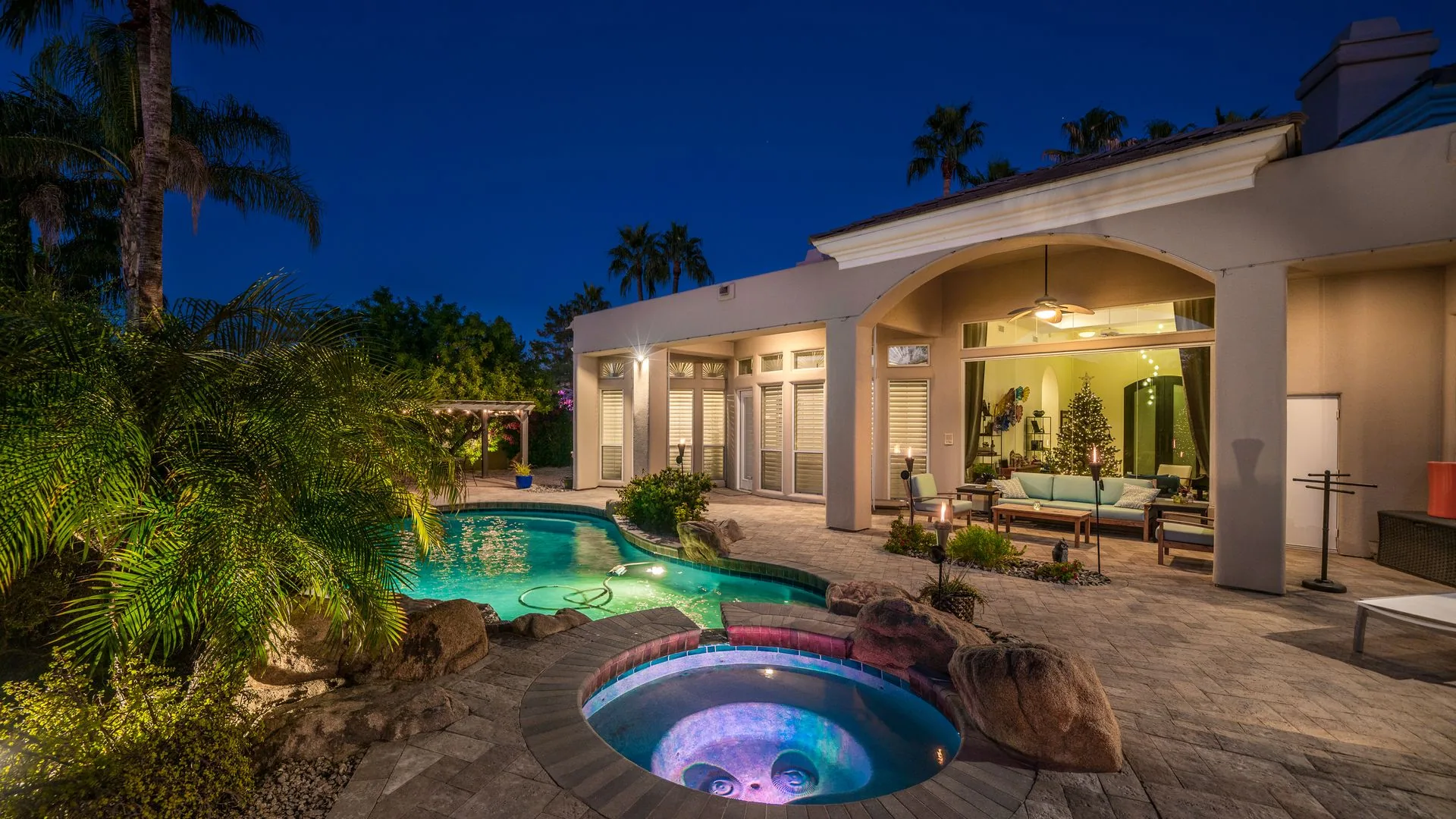
Fire and Water Feature Ideas for Arizona Backyards
October 12, 2026 · By Diamond Cut Landscaping

Fire and water feature designs are one of the quickest ways to make your Arizona backyard feel more livable, especially when you are working with lots of stone, pavers, and sun-baked walls. You get the sound of moving water, a little glow after dark, and a focal point that makes the whole layout feel intentional instead of just "patio plus pool."
We build outdoor living spaces all over the Phoenix metro, and if you want a single upgrade that changes how the yard feels day and night, fire-and-water is a strong contender. Below you will get practical fire and water feature ideas that actually work in the Sonoran Desert, plus the cost ranges we see in the Valley and the design choices that keep maintenance reasonable.
What a fire and water feature is (and what it is not)
A fire and water feature combines a gas flame with circulating water in one coordinated setup. The version most homeowners picture is a fire water bowl: water spills evenly over the rim while the burner sits protected in the center so the flame stays crisp.
You might also see the same concept done as a scupper wall with water sheets and nearby fire bowls, or a raised wall behind a pool that stacks multiple bowls in a row. If you are curious how the combination is typically built and why people love it, the Aquascape guide to fire-and-water features does a nice job describing the appeal without overcomplicating it.
Why fire and water feature designs fit Phoenix outdoor living
Phoenix yards are built for heat and durability. That usually means hardscape, clean lines, and surfaces that can take full sun. It also means the space can feel a little "all hard edges" if you do not introduce something with motion.
- Water adds movement and softens the soundscape. A gentle spill can cover up street noise, a neighbor’s pool equipment, or your own HVAC hum.
- Fire gives you a reason to sit outside in winter. Our evenings cool down fast from December through February, and a flame element pulls people toward it.
- The combo photographs well and looks even better in person. You get reflections across water and stone that regular uplighting alone cannot fake.
Fire and water feature ideas that work in Arizona backyards
The internet is full of concepts that look great in mild climates, then turn into high-maintenance projects in a dusty, hard-water desert. When we help you pick a direction, we are looking for designs that handle UV, wind, and monsoon grit without needing constant babysitting.
Fire water bowl ideas for courtyards, patios, and pools
If you want a big visual payoff without taking up much square footage, a fire water bowl is hard to beat. You can drop one into a courtyard as the centerpiece, set a matching pair on a raised planter wall, or line several along a long back wall so the yard has some rhythm.
Poolside installs are a favorite because the flame reflects across the pool surface once the sun is down. And if you are already reworking your pavers or travertine, it is smart to plan the elevations and drainage at the same time. That is exactly what we do during custom patio design and installation, so the spill line looks even and the surrounding area stays comfortable to walk on.
- Best for: modern layouts, compact patios, pool remodels
- Fuel: natural gas when available, propane when a gas run is not practical
- Design tip: keep a clean apron around the bowl so splash does not hit seating
Wall spillways plus fire bowls (the resort-style backdrop)
If your yard already has a raised wall, a change in grade, or you are planning a retaining wall behind the pool, you can turn that structure into the “main view” with water spillways and fire bowls. The water gives you a steady sound buffer, and multiple bowls add that layered look you see at high-end hotels.
The part that matters in Phoenix is what happens when the wind kicks up or when monsoon storms dump debris fast. We plan spill directions, basin access, and drainage so the system is not overwhelmed after a dusty storm.
Reflecting water with nearby fire (a clean look without the splash)
You do not always need fire and water in the exact same object to get the effect. Another approach is putting a fire bowl near a reflecting trough or a shallow water sheet so you get a mirror effect, but less overspray.
Spacing matters. Put them too close and you will fight wind, misting, and inconsistent flames. Many designers aim for a few feet of breathing room between elements, and Art of the Yard’s fire-and-water integration tips explains why that separation helps each feature read clearly.
Design tips for a low-maintenance fire and water feature in the desert
A fire-and-water showpiece should feel simple to live with. That comes down to a few decisions you make before the first paver is set.
- Plan views from inside the house. If you see it from the kitchen and living room, you will actually use it.
- Respect wind. We angle spill lips and select scuppers that reduce mist, especially in yards that funnel breezes.
- Build in service access. You should be able to reach the pump and burner without tearing apart masonry later.
- Use lighting that makes water visible at night. A flame looks great on its own, but water disappears without the right light. Our low-voltage LED landscape lighting installs are a simple way to highlight the sheen and keep walkways safer after dark.
Materials that hold up under Phoenix sun and hard water
Arizona sun is not forgiving. Between UV exposure, heat cycling, and mineral-heavy water, cheaper finishes tend to show wear fast. When you want a feature that still looks good years from now, these are common winners:
- Copper: ages into a natural patina and fits both desert and modern styles.
- GFRC: lighter than traditional concrete and available in clean shapes, with solid durability when it is made well.
- Stainless steel: sleek, modern, and resilient when paired with quality components.
- Quality stone and cap materials: important for heat movement and long-term stability.
One more real-world note: hard water leaves scale. Material choice helps, but good circulation and easy cleaning access are what keep it from becoming a constant project.
Natural gas vs. propane for Phoenix fire features
Most permanent fire-and-water installs in the Valley use natural gas because it is convenient and consistent if your home already has gas service. Propane works well when a gas line run is expensive or the route is complicated, but you will want to think through tank placement and refills.
If you are also considering a separate fire pit seating area, you will want your layout and gas planning to work together. Our blog post on fire pit patio ideas for Phoenix paver patios helps you think through placement, clearances, and how people actually move through the space during gatherings.
Phoenix cost ranges for fire and water feature installations
Costs depend on the feature itself and, honestly, on the “boring” parts: gas line distance, electrical access for the pump, excavation, and how much masonry is needed. Below are realistic installed ranges we commonly see around Phoenix. These are planning numbers, not a bid.
In Phoenix, site conditions can swing pricing. Caliche, limited side-yard access, or demo work on existing concrete and pavers can all add time and equipment.
Maintenance basics you can actually keep up with
You do not need to baby a properly built system, but you do need a simple routine. The two big desert issues are evaporation and mineral buildup.
- Keep the water moving. Good circulation helps prevent stagnant smells and reduces algae risk.
- Rinse and wipe mineral scale before it gets stubborn. A quick touch-up beats a deep clean later.
- Check the burner after wind events. Dust and debris can affect ignition and flame pattern.
- Plan for easy filling. Evaporation in summer is no joke, so an easy-fill access point makes life easier.
If you like the idea of water in the yard but worry about clarity and upkeep, the advice in desert-proofing backyard pond clarity shares desert-specific habits that translate well to many fountain and reservoir systems.
FAQ: Fire and water feature ideas for Arizona backyards
Do fire-and-water features make your patio feel cooler in summer?
They do not lower the actual air temperature, but the sound and visual movement can make the space feel more comfortable. Shade and airflow still do the heavy lifting in July and August.
Is a fire water bowl safe around kids and pets?
It can be, when it is installed correctly with proper clearances, stable mounting, and professional gas connections. Since it is open flame and hot surfaces are possible, we help you place it away from play zones and high-traffic paths.
Should you choose natural gas or propane in Phoenix?
If your home has natural gas and the run is reasonable, natural gas is usually the easiest for regular use. Propane is a solid option when gas access is limited, but you will want to plan tank location and refills.
How far apart should the fire and water elements be?
A good starting point is roughly 3 to 4 feet, then adjust based on wind exposure and splash pattern. The goal is clean flames and water that stays where it belongs.
Can you add a fire-and-water feature to an existing patio or pool?
Often, yes. The key is access for gas and electrical, plus whether we need to adjust elevations for a clean spill and safe drainage. It is usually easiest during a remodel, but retrofits are common.
Conclusion
A well-designed fire and water feature turns one part of your yard into the spot everyone naturally drifts toward, whether it is a quiet weeknight or a full patio dinner. If you want help narrowing down the right layout, materials, and utility plan for your home in Phoenix, Scottsdale, or anywhere in the Valley, reach out through the Diamond Cut Landscape contact page for a design consultation.