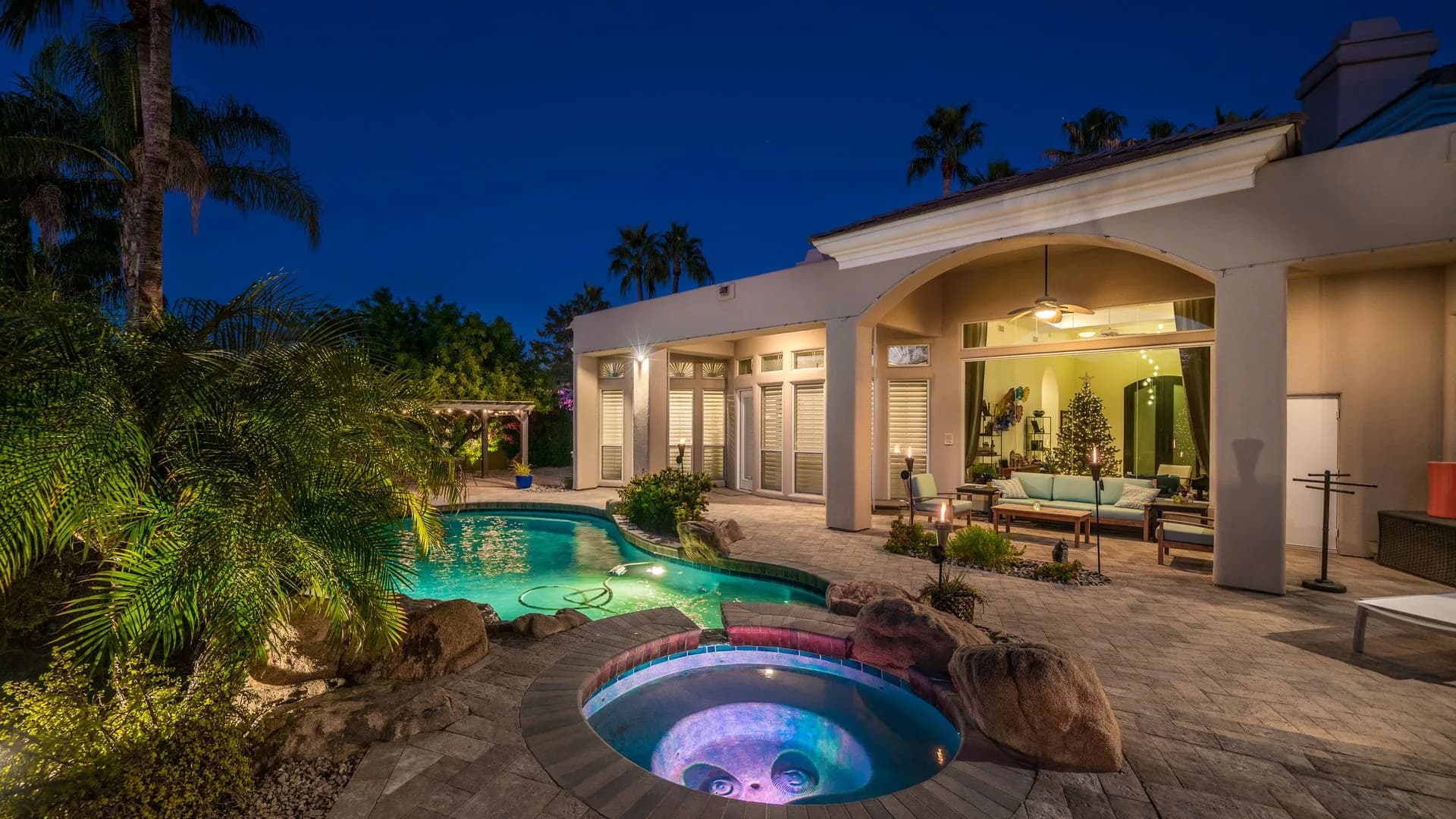
Front Yard Lighting Ideas for Phoenix Curb Appeal
October 20, 2026 · By Diamond Cut Landscaping

Front yard lighting is one of those upgrades you notice every single night, especially in Phoenix where the sun drops and the shadows get deep fast. Done well, it makes your home feel welcoming from the curb, helps people find the path without guessing, and shows off the textures you already invested in, like pavers, stucco, boulders, and statement plants.
We build lighting plans all over the Valley, from Phoenix to Scottsdale to Paradise Valley. The best-looking systems are not the brightest. They are the ones that feel intentional, with warm light in the right places and nothing shining into your eyes or your neighbor’s windows.
Why front yard lighting pays off in Phoenix
You get the obvious benefit first: your home looks better at night. But the practical wins are what most homeowners end up appreciating most. If you have pavers, decomposed granite, flagstone, or even a simple step up to the porch, small changes in grade can disappear after dark. Lighting helps everyone move around confidently, including guests, delivery drivers, and you when you come home late.
A well-lit entry also sends a clear signal that the home is cared for. That matters for security, and it is one reason many lighting pros point to entry lighting as a smart deterrent when it is used thoughtfully. For a good overview of how different fixture types work together around a home, see the landscape lighting planning and low-voltage basics resource on This Old House.
One more Phoenix-specific note: you do not need a high-wattage setup to get a high-end look. Most residential landscape systems are low-voltage, which is safer and easier to expand later when you add a new walkway or refresh the planting.
Phoenix front yard landscape lighting tips (heat, dust, glare)
Our summers are not gentle, and neither is the dust. Add monsoon moisture and you have a pretty good “stress test” for anything installed outdoors. If a lighting system fails after one season, it is usually not bad luck. It is often materials, connections, or placement.
- Pick fixtures built for real heat. Brass and copper typically age better than bargain aluminum or plastic when they live in full sun.
- Stick with LED. LEDs run cooler and use far less power, which matters when lights are on most nights.
- Stay warm in color temperature. In most Valley neighborhoods, 2700K to 3000K looks natural on stucco, travertine, and warm-toned pavers.
- Aim to reduce glare. You want to see the effect on the landscape, not the bulb itself.
- Plan wiring before hardscape goes in. If you are building a new walk or driveway, it is the easiest time to add conduit and set clean fixture locations.
If you are rolling lighting into a bigger front-yard refresh, our low-voltage LED lighting installation service page shows the kind of systems we install and how we approach layout and long-term durability.
Front yard lighting idea: uplighting that flatters desert plants
If you want one technique that instantly upgrades curb appeal, uplighting is it. A small fixture tucked low can make a saguaro look sculptural, give a palo verde a soft canopy glow, and pull out the ribbing on agaves and cacti. Those shadows you see on the wall or across gravel beds are what make the yard feel “designed” at night.
A simple starting point: place the fixture about 12 to 18 inches from the base of the plant and angle it so the light grazes across texture instead of blasting straight upward. With multi-trunk trees like mesquite, two smaller uplights often look better than one strong beam. It reads more natural and cuts down on hot spots.
- Best for: saguaros, organ pipe cactus, palo verde, mesquite, palms, specimen agaves, boulder accents
- Quick check: step back to the sidewalk and make sure you cannot see a bright diode staring at you
- Common slip: placing uplights too far from the plant so the light “floats” and the texture disappears
Front yard lighting idea: path lighting that guides your feet (not your eyeballs)
Path lights are less about drama and more about comfort. When you walk up to your front door, you should see the walking surface clearly and get a gentle sense of direction. If the first thing you notice is a row of glowing hats, the fixtures are doing too much.
For most Phoenix front walks, we start with spacing around 10 to 15 feet, then adjust based on beam spread, walkway width, and any turns. Steps, grade changes, and the last few feet to the entry get priority, because that is where people tend to misstep.
If you are rebuilding the front approach, lighting and hardscape should be planned together. That is how you avoid awkward trenching later and get cleaner placement along edges. Our hardscape design and installation services pair really well with lighting for that reason.
Front yard lighting idea: wall grazing for stucco and stone textures
Phoenix architecture has great surfaces for lighting, from smooth stucco to sand-finish textures to stacked stone. Wall grazing is the trick that makes those materials look dimensional after dark. You set fixtures close to the wall and aim the beam upward so it “skims” the surface and pulls out shadow and depth.
As a starting point, plan fixtures about 12 to 18 inches off the wall, then fine-tune at night. Rough stone needs less intensity than smooth stucco because the texture does some of the work for you. We also like grazing for entry columns and courtyard walls because it makes the approach feel finished, not flat.
- Best for: stucco textures, stone veneer, entry columns, courtyard and wing walls
- What to avoid: wide flood beams that spill into windows and create glare
Front yard lighting idea: spotlights for focal points (boulders, address numbers, art)
Spotlights are your “look right here” tool. In a desert front yard, that focal point might be a boulder grouping, a specimen cactus, a courtyard feature, or even cleanly lit address numbers so guests are not hunting for your house.
The easiest way to make spotlights feel upscale is to use fewer of them. Pick one or two focal points and support them with softer path lighting. When everything is a spotlight, nothing stands out, and you are more likely to create glare or light trespass.
If you have a small fountain or bubbling feature near the entry, lighting is what keeps it from disappearing at night. When we build features like that, we coordinate the lighting so the water movement shows up and the surrounding planting does too. See our desert water features design and build services for examples of how we integrate those elements.
Front yard lighting, layered: the simple approach that looks “complete”
The front yards that look best at night are almost always layered. Think of it like taking a photo. You want a foreground, a midground, and a background, not one bright subject and a bunch of darkness.
- Safety layer: path lights, step lights, and any driveway or edge lighting where people walk
- Accent layer: uplights for trees and cacti, spotlights for a boulder or feature plant
- Architecture layer: wall grazing, entry sconces, and soft light near the porch and garage face
If you are designing more than just the front entry, it helps to think about how your whole property functions after sunset. Our blog post on designing an outdoor entertaining space with shade, seating, and lighting walks through how lighting fits into a bigger outdoor-living plan.
Warm-white LEDs: why 2700K to 3000K fits Phoenix homes
Color temperature is where a lot of DIY lighting plans go sideways. In Phoenix, warm-white LEDs in the 2700K to 3000K range usually look right on the materials we use most, like tan block, buff stucco, travertine, and warm-toned pavers. It also keeps the yard feeling inviting instead of sterile.
Cool white lighting can read harsh on desert finishes and it tends to feel glary, even when the fixture output is not that high. If you like a more modern look, you can still keep the color warm. Use tighter beams, cleaner fixture styles, and more precise aiming to get that crisp feel without turning your front yard blue.
What front yard landscape lighting costs in Phoenix
Pricing depends on how many fixtures you need, how far the wiring runs, fixture quality, and whether trenching crosses finished surfaces like pavers or concrete. Here are realistic installed ranges we often see around Phoenix. DIY kits can be cheaper upfront, but they rarely match the durability or aiming flexibility of a professionally built system.
When you compare quotes, ask what the fixtures are made of, how connections are waterproofed, and whether the contractor plans a nighttime aiming visit. That last step is where “pretty good” turns into “that looks amazing from the street.”
Common front yard lighting mistakes (and easy ways around them)
Most lighting issues are not about style. They come down to a few predictable missteps. If you avoid these, your system will look better and you will not be chasing fixes after monsoon season.
- Patchy coverage: one light at the door and one at a tree leaves big dark gaps. Add a path layer for continuity.
- Over-bright fixtures: more brightness rarely equals more curb appeal. Better placement and aiming almost always wins.
- Visible diodes from the street: use shields, tuck fixtures into planting pockets, and aim carefully.
- Low-quality connectors: heat, dust, and moisture find their way into weak connections. Sealed, professional-grade connections matter.
- No plan for plant growth: desert plants grow, lean, and fill in. Your lighting should be easy to adjust as the landscape matures.
If you want extra examples of front-yard lighting patterns and where they tend to work best, the front-yard landscape lighting ideas guide from Volt Lighting is a helpful reference for common techniques and layouts.
FAQ: Front yard lighting ideas for Phoenix curb appeal
Is low-voltage front yard landscape lighting safe?
Yes. Most modern systems use 12-volt power, which is widely considered safer for residential landscape applications than line voltage. It also makes it easier to expand later if you add new planting beds or a longer walkway.
How many path lights do you need for a typical Phoenix front walkway?
A good starting point is one light every 10 to 15 feet, then adjust for output and walkway width. We typically light steps, turns, and grade changes first, then fill in for smooth, even guidance.
What color temperature looks best on stucco homes?
In most Phoenix neighborhoods, warm white in the 2700K to 3000K range hits the sweet spot. It reads clean and welcoming without the harshness you often get from cooler LEDs.
Do brass and copper fixtures really matter in Phoenix?
They often hold up better to UV and temperature swings than cheaper materials. That said, overall build quality and properly sealed connections matter just as much as the metal choice.
Should you add lighting during a remodel or after the fact?
If you are building or renovating hardscape, plan lighting early. It is simpler to hide conduit under pavers and put fixtures exactly where you want them. You can retrofit later, but it can add labor if trenching crosses finished surfaces.
Conclusion: start simple, then build a layered front yard lighting plan
The best front yard lighting in Phoenix is warm, subtle, and built in layers. Start with safe footing on the path, add uplighting for your best desert plants, and use a little architectural light to tie the whole exterior together. If you want help laying out a system that looks great and holds up through our summers, reach out through the Diamond Cut Landscape consultation request page and we will help you map it out.