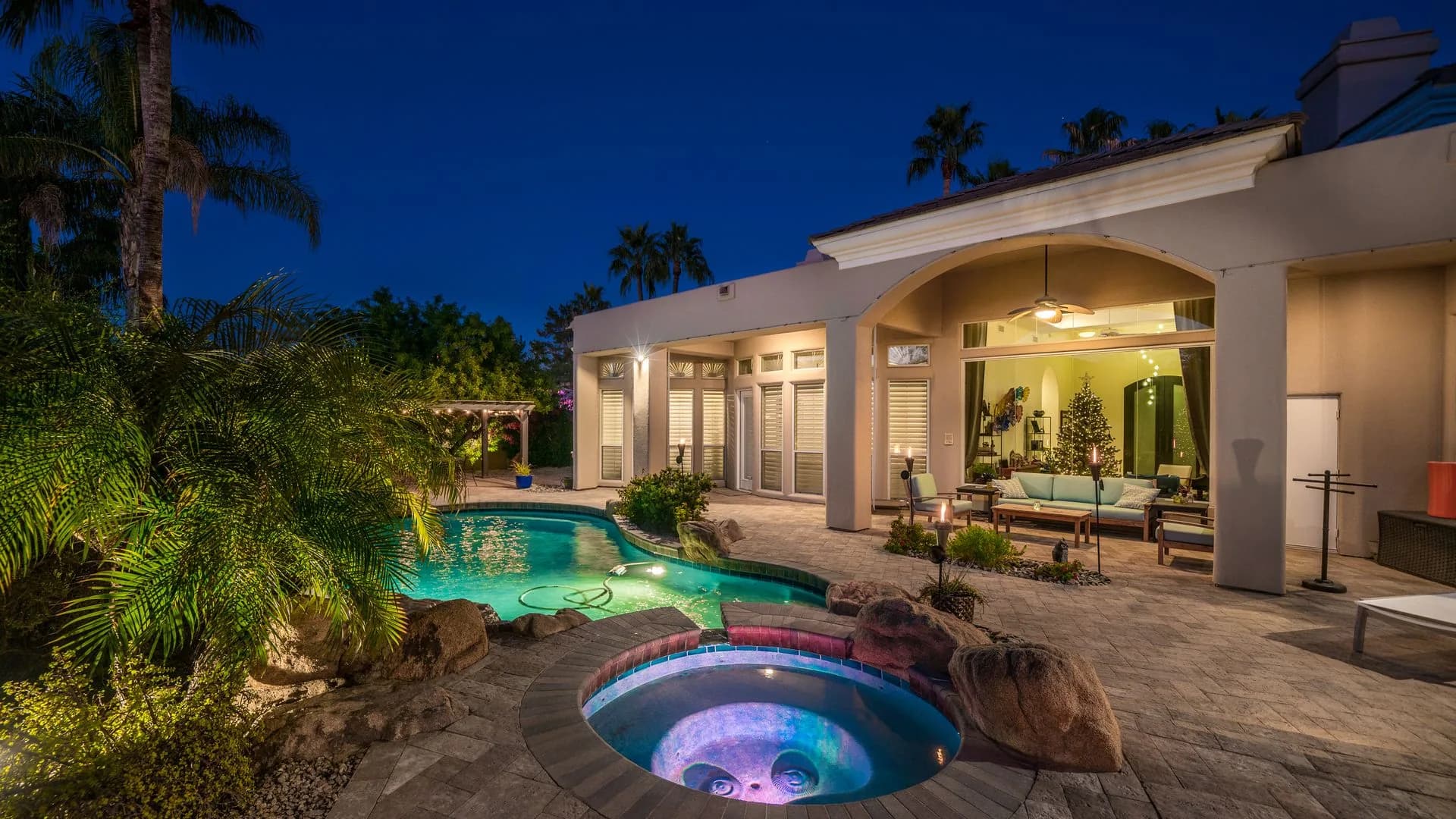
LED Landscape Lighting Costs & Benefits in Arizona
November 20, 2026 · By Diamond Cut Landscaping

LED landscape lighting is one of those upgrades you love the first night it’s in. Your home looks more dialed-in, walkways feel easier to navigate, and the backyard suddenly becomes part of your evening routine. If you’re in the Phoenix metro, you probably have two practical questions: what will it cost, and will it hold up in our heat. Let’s walk through real pricing, what drives it up or down, and why most homeowners end up glad they did it.
If you’re already planning a patio, pergola, pavers, or fresh desert planting, lighting is the easy “finishing touch” that makes the whole design read clearly after sunset. It’s also usually simpler (and cleaner) to install when we can plan wire paths and fixture locations before hardscape and planting are finalized.
LED landscape lighting basics: why most Arizona systems are 12V
Most residential LED landscape lighting in Arizona is a low-voltage 12V setup. In plain English, a transformer converts your home’s 120V power down to 12V, then low-voltage cable feeds each fixture (path lights, uplights, step lights, and so on).
That 12V approach is popular around Phoenix for a few reasons. It’s generally safer around planting beds and walkways, it’s easier to expand later, and it’s flexible when your yard evolves. If you want a quick, non-salesy explainer of how these systems are commonly built, check out this low-voltage landscape lighting FAQ.
LED landscape lighting cost in Phoenix: a realistic budget range
LED landscape lighting cost comes down to fixture count, fixture quality, and how involved the layout is. A small, straightforward front walkway needs fewer lights and fewer wire runs. A property with side-yard access paths, multiple gates, steps, and a backyard entertainment area will usually need zones and longer cable runs.
In current 2026 pricing, a professionally installed LED fixture often ends up in the ballpark of $65 to $300 per fixture installed. Path lights tend to be more budget-friendly, while heavier-duty brass fixtures and specialty beam uplights live at the higher end.
| System size | Typical scope | Installed cost range |
|---|---|---|
| 8–12 fixtures | Basic path lighting plus a few accent points | $1,200–$2,800 |
| 10–20 fixtures | Most front yards or a partial-property system | $2,000–$6,000 |
| 25–40 fixtures | Full-property lighting with multiple zones and focal points | $3,000–$8,000+ |
If you like comparing numbers, Angi’s nationwide reporting also lands many professionally installed systems in that same general bracket. You can cross-check in their landscape lighting cost guide.
LED landscape lighting cost in Arizona: what actually changes the price
If you’ve lived through a Phoenix summer, you already know what sun does to patio furniture, hoses, and anything plastic left outside too long. Landscape lights deal with that same UV, plus dust, plus monsoon downpours. So yes, “what brand” matters, but what we’re really talking about is material, connections, and system design.
- Fixture material: Brass and copper cost more up front, but they handle our sun and heat much better over the long haul.
- Transformer and load planning: A transformer that’s sized right (with breathing room) is less likely to struggle during the hottest months.
- Wiring and connections: Heat-resistant cable and waterproof connectors are not glamorous, but they prevent the annoying “one light keeps cutting out” problem.
- Layout complexity: Multiple zones, long wire runs, and lighting that weaves through existing hardscape takes more time and planning.
For a solid overview of the cost factors that tend to move the needle, Tru-Scapes has a helpful breakdown of outdoor landscape lighting installation cost factors.
LED landscape lighting operating cost: what you’ll pay to run it
Most homeowners are surprised by how little electricity LED lighting uses. As a rough example, a modest system with around a dozen fixtures that runs about 6 hours a night can cost only a few dollars a year to a couple dozen dollars a year in power, depending on wattage, run time, and your rate plan.
If you want to see the math laid out in plain terms, this guide walks through LED landscape lighting cost and electricity usage calculations. The other “hidden savings” is fewer bulb swaps. In the desert, not having to constantly tinker is a real quality-of-life perk.
Benefits of LED landscape lighting in Phoenix neighborhoods
You’re not installing lights just to make the yard brighter. You’re shaping how your home feels at night. In the Valley, these are the wins people mention after the first couple of weeks.
- Safer movement: Steps, pavers, and decomposed granite paths are a lot easier to navigate when the edges are defined.
- Better curb appeal after dark: A warm, balanced glow on the entry and a few accents on plants makes the front yard feel finished, not forgotten.
- A more secure feel: Side yards, gates, and dark corners are less “mysterious” when they’re thoughtfully lit.
- More usable outdoor time: In summer, evenings are when you actually want to be outside. Lighting helps you stay out there longer without dragging out lanterns or relying on harsh floodlights.
If your focus is the front of the home, you’ll get extra ideas from our post on front yard lighting ideas for Phoenix curb appeal.
LED landscape lighting design tips that work in the Sonoran Desert
Good lighting is more about restraint than brightness. You want layers and contrast, not a yard that looks like a parking lot. With stucco walls, desert stone, and native plants, a few choices make a big difference.
- Stick with warm white: Most Phoenix homes look best around 2700K–3000K so the yard feels welcoming and natural.
- Accent, don’t spotlight everything: Pick a couple of strong features, like a saguaro, a multi-trunk tree, a textured wall, or an entry column.
- Light where you walk, not just where you look: Entries, steps, side-yard routes to gates and bins, and transitions off patios matter most day-to-day.
- Plan for heat and expansion: Leave headroom on the transformer and keep future zones in mind if you think you’ll add a pergola, seating wall, or outdoor kitchen later.
When lighting is planned as part of the overall layout, the install is cleaner and the end result looks intentional. That’s why we often start with landscape design plans so fixture locations and cable routes make sense before construction day.
DIY vs. professional installation: what changes the final look
If you’re lighting a small area and you don’t mind trenching and adjusting fixtures, a DIY kit can work. The common snag is that the yard can look decent at noon, then fall flat at night because spacing, beam angles, glare control, and voltage drop were not accounted for.
Professional installation is usually the better call when you have multiple zones, longer runs, lots of hardscape, or you want the lighting to feel subtle instead of “obviously installed.” We also like to do final aiming after dark, because that’s when you can see what the light is really doing and tweak it until it looks right.
FAQ: LED landscape lighting costs and benefits in Arizona
How much does LED landscape lighting cost for a typical Phoenix front yard?
Many front yards land around 10–15 fixtures. Depending on fixture quality and how many areas you want to highlight (entry, tree, house facade, side path), you’ll often see totals in the $2,000–$3,500 range installed.
Is LED landscape lighting bright enough for security?
Yes, as long as the layout is smart. You’ll usually get better results from layered path lighting and targeted brightness at entries, gates, and side yards than from trying to blast the whole property with one or two bright floods.
How long do LED landscape lights last in Arizona?
Quality LED modules are often rated around 50,000 hours. In real life, desert sun and water intrusion are what shorten lifespan, which is why fixture material and connection quality matter as much as the LED itself.
What color temperature looks best with desert landscaping?
For most homes, 2700K–3000K complements stucco, block walls, stone, and desert plants without the bluish look that can feel harsh at night.
Is LED landscape lighting worth it in Phoenix?
If you want your yard to feel complete after dark, LED landscape lighting is one of the best value upgrades you can make in Arizona. The installed cost is usually manageable, the power bill impact is small, and you feel the benefit every evening when your paths, plants, and outdoor spaces actually show up at night.
If you’d like help mapping out a low-voltage system that fits your home and budget, reach out through our Diamond Cut Landscape contact page and we’ll talk through options.